|
|
By  David Craig, on June 12th, 2013 A couple of readers have challenged me to give an answer to the question of how we escape the debt death spiral I wrote about yesterday.
Firstly, as the Irish say, I wouldn’t start from where we are now – I would have started from the moment the Coalition got into power in 2010. But we are where we are. So, here are a few ideas (I’m afraid some of my proposals will upset Guardianistas. But Britain is as bankrupt as the loss-making Guardian newspaper, so we can’t go on spending more than we earn):
1. Declare a state of “national economic emergency” and put all public-sector and council managers and administrators on a 4-day week and all quangos on a 3-day week. After all, who would notice if the Department of Health only worked Monday to Thursday and the Equality and Human Rights Commission only did Monday to Wednesday? Saving £150m a week – £7.5bn a year
2. Set a maximum public-sector pension of twice the average wage and abolish the 3 years taxfree payments made to bureaucrats and top civil servants. Saving maybe £2bn a year
3. Stop all foreign aid till Britain eliminates its budget deficit and reduces its debt to 30% of GDP. Saving £10.5bn a year
4. Leave the EU – we can’t afford the cost of membership. Saving £19bn a year
5. Stop all subsidies to “green energy” and stop closing coal-fired power stations. Saving maybe £1bn a year. Resurrect Britain’s coal mines – extra tax revenues maybe £500m a year
6. Replace Corporation Tax with a retention of part of the VAT charged by companies so that all companies operating in Britain pay tax whether they claim to be based in Jersey, Cayman Islands or on The Moon. (Financial institutions would pay a tax based on their assets). Increase in tax revenues maybe £13bn a year. This would also result in many foreign firms moving their HQs to Britain creating say 10,000 well-paid jobs and generating say £3bn in extra income tax and NI
7. Declare activity sectors like energy, water, airports and ports as “strategic national assets” that can only be owned by British companies fully based in Britain for tax purposes. Increase in tax revenues, perhaps £3bn a year
8. Bring in a False Claims Act whereby whistleblowers who reveal that government departments are being overcharged receive a % of all money saved. Saving of say 1% on the government’s procurement bill of £170bn = £1.7bn
9. Bring in a scheme whereby public-sector, frontline workers (not managers) get paid a % of any money saved through a suggestion scheme up to a maximum of £50,000 per worker. Saving perhaps 1% of government spending of £500bn = £5bn
10. Set a mandatory improvement target for all public-sector managers of a very modest 2% a year. Saving in 1st year = £10bn: in 2nd year £20bn and so on
11. Cut the BBC’s budget by 5% a year for 5 years and restrict the BBC to making public-service programmes, not junk entertainment that belongs on the increasing number of commercial channels. Saving in 1st year = £150m: 2nd year = £300m: 3rd year = £450m and so on
12. Lower housing benefit by 1% a year and the cap by 5% a year for 2 years to force down rents across the private rented sector. Saving maybe £260m in 1st year: £520m in 2nd year and so on
13. Cut the number of MPs, MSPs, members of the Welsh and Northern Ireland Assemblies and their staff by 50%. Reduce the Lords to 100 members from over 850. Saving maybe £500m a year. Sell off Portcullis House earning maybe £300m
14. End the culture of breeding at taxpayers’ expense – only give child benefits to the first 2 children: restrict social housing and housing benefit to people over 25: house anyone, who cannot live with their parents, in army-like barracks where they have to work (cleaning and so on) to earn privileges like TV. Saving maybe £3bn
15. Stop us being bankrupted by immigration – withdraw from the European Convention on Human Rights: extend restrictions on Romanians and Bulgarians for 10 more years: tighten habitual residency rules: deport all foreign criminals: no benefits to be paid to anyone who is not a British citizen or who has not worked full-time in Britain for 10 years. Saving maybe £5bn a year
16. Restrict citizenship – make the right remain and granting of British citizenship signed legal agreements between the government and the person, whereby it is agreed that any breach of the law by that person or any dependent results in automatic withdrawal of the right to remain in Britain and immediate deportation. Saving maybe £2bn a year
17. Give student grants to anyone aged 16 to 24 who goes on a vocational course to become a plumber, electrician, car mechanic, carpenter, bricklayer etc. Cost maybe £1bn
18. Impose a land tax on any development land that has been held for more than 3 years by a developer who has not built anything. Launch a programme to build 100,000 housing association homes a year on brownfield sites. Cost perhaps £4bn, but increases in revenue from income tax and NI and reduction in unemployment payments saving perhaps £1bn
We’re getting close to £90bn saved. Then hopefully economic growth would increase tax revenues by say 5% (£30bn) and that gives us the £120bn we need to eliminate the £120bn deficit.
But then we need to start paying down the debt of £1.2trn – that’ll have to wait for another day.
(Just a reminder – I’ve reduced the price of my latest book GREED UNLIMITED – paperback and Kindle versions – hopefully someone somewhere will now buy a copy or two)
By David Craig, on June 11th, 2013 I challenge anybody to go to this website of our rising national debt and watch it go up without feeling extremely nauseous https://www.nationaldebtclocks.org/debtclock/unitedkingdom
As the Tories claim we’re on the road to recovery and Ed Balls announces he can save £200m by cutting benefits to any pensioners who have more than fifty quid in the bank, the figures tell a different story. We’re caught in a classic death spiral of borrowing leading to higher interest payments leading to more borrowing leading to more interest payments…………..and even if economic growth meant that taxes collected by the government went up by a fanciful 3% (£20bn) a year, our debts would still increase for at least the next 5 years and probably for the next 10 years as public spending is also going up.

The numbers are almost too huge to grasp – our debt is increasing by around £3,888 per second: £233,000 per minute: £14,000,000 per hour: £329,000,000 per day: £2,300,000,000 a week: £120,000,000,000 per year.
But, rather than bleating on about the problem, what’s the solution? There are 3 main options:
1. The Government cuts public spending by about £100bn from £750bn a year to £650bn a year. This would probably lead to massive civil unrest and would be totally impossible for any government that wants to be re-elected
2. Britain defaults and tells its creditors to get stuffed. This would actually be easy to do. Many countries have defaulted and recovered quite quickly. The problem is that this would destroy many foreign banks, British banks and insurance companies that hold almost £1,000,000,000,000 of UK government debt. Moreover, it would leave us unable to borrow and we’d be forced to cut public spending down to £650bn to match tax revenues as in option 1 above – impossible to do without causing civil unrest.
3. That just leaves one way out of the death spiral – the problem is that nobody knows what this is.
(Just a reminder – I’ve reduced the price of my latest book GREED UNLIMITED – paperback and Kindle versions – hopefully someone somewhere will now buy a copy)
By David Craig, on June 10th, 2013 I made a comment on a newspaper website the other day suggesting that people grabbing buy-to-let properties were making a negative contribution to the economy. Sure enough, I was subjected to a torrent of abuse including one reader who called me “a stupid little moron”. So let’s look at a few facts:
On TV and in the press we’re constantly being told that buy-to-let properties are the place to put our savings. With interest rates below the level of inflation, most pension funds charging huge fees but not giving any growth and the Government reducing access to the state pension, it’s understandable that people with a bit of spare cash are turning to property for an income and for their retirement.
And now, the Government’s Funding for Lending and other schemes to keep mortgage rates low and house prices high until the next election are making buy-to-let even more attractive.
But are these people providing a service by renovating and renting out houses and flats? Or are they just profiteers and parasites, pushing up house prices and then living off those who can’t afford to buy their own homes?

I think there are about 14.5 million homes in England (I don’t have the figures for the UK). Of these 14.5 million, around 3.6 million (a quarter) are buy-to-lets. If we assume that the average buy-to-let is costing £500 to £700 a month, this means that renters are paying somewhere between £1.8bn and £2.5bn a month (£22bn to £30bn a year) to live in someone else’s property. That’s £22bn to £30bn a year being taken mostly from the less well-off and put directly into the pockets of the better-off. Or £22bn to £30bn being taken mostly from younger people starting out in their careers and given mainly to older people who have managed to accumulate a bit of capital. Buy-to-lets add nothing to our national wealth. They produce nothing that can be sold abroad. They just move money from one section of society to another, from one generation to another. Moreover, as they account for about a quarter of home purchases, they push prices up beyond the means of many (younger?) people.
At the moment, buy-to-lets seem to be profitable investments for the lucky few – at least that’s what gushing BBC presenters and newspaper property writers claim. But there are at least two threats to the buy-to-let paradise.
Firstly, the government, particularly a Labour government, might start to impose rent controls in a bid to reduce the ever-increasing cost of housing benefits:
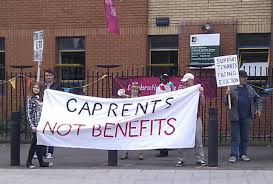
Housing benefit has shot up from around £10bn in 2003 to £21bn last year and is expected to hit £25bn by 2015. This is unsustainable. And this projection doesn’t even take account of the one million Romanians and Bulgarians heading to Britain from January 2014.
And secondly, when Labour get back into power in 685 days and the deluded Ed Balls goes on a Brownian spending spree, he’s going to need money – lots of it. And there, ripe for the picking is £22bn to £30bn being taken by buy-to-let owners.
Buy-to-let owners beware – it’s not unlikely that, under the banner of “fairness”, the repulsive (IMHO) Balls may be coming after your money. After all, there’s not much else left for our incompetent, wasteful, financially-incontinent governments to tax. Mr Balls may make you rue the day you ever entered the buy-to-let market
By David Craig, on June 9th, 2013 I’ve just reduced the price on both the paperback and Kindle editions of my latest book GREED UNLIMITED by about two quid. Perhaps a few people would now show their support for this website by buying a few copies? Just a thought.
By David Craig, on June 9th, 2013 As the much revered Nelson Mandela goes back into hospital, many South Africans must fear for their future. There is no danger of the country descending into the kind of civil war so beloved of most African countries. The danger to South Africa is widespread corruption practised by the political and bureaucratic classes. This corruption ensures that the rich get richer while the vast majority of South Africans live in grinding poverty in shacks without running water or electricity.
A new report called The Real State of the Nation published this year concluded that South Africa is fighting a losing battle against corruption. “Corruption is rampant,” the author of the report said, “It’s out of control … And the dedicated units that have been created to fight financial misconduct are in essence fighting a losing battle.”
A former managing director of the World Bank Mamphela Ramphele recently said, “A culture of corruption and impunity is seeping through every level of government, corroding our entire society. It is estimated that corruption robs us of more than R30 billion ($3.34 billion) from our government’s budget every year.” Substantiating her point, Ramphele queried where the country could be if R30 billion a year was spent on schools, bridges and roads, rather than being lost to corrupt practices.
One of the most newsworthy possible scandals was 206 million rand ($22.98 million) of state funds used on President Jacob Suma’s private compound in his home village of Nkandla, in KwaZulu-Natal province. Inevitably, a government inquiry found that this money had only been used for security upgrades and related costs at the president’s private compound (not for any home improvements) and that this decision was based on an assessment of threats to Zuma. Well, I guess that the president should feel pretty safe with $22.98 million spent on security for his home – that’s an awful lot of bullet-proof windows, security cameras and burglar alarms.
Fortunately (for the corrupt), thanks to a new media bill passed a month or so ago by an overwhelming majority in the South African parliament, in the future politicians and bureaucrats shouldn’t be embarrassed by so many news stories revealing their venality. The “secrecy bill” will increase the government’s power to restrict access to information and impose hefty fines and jail terms on reporters who publish information the government classifies as secret. Like President Zuma’s home improvements, perhaps? Sorry, I meant security for his home.
Here’s a picture of South Africa’s former president Nelson Mandela:

And here’s one of South Africa’s current president Jacob Zuma:

One of these men is respected around the world for his integrity. The other is said to be very rich. Can you guess which is which?
By David Craig, on June 8th, 2013 Our congratulations should probably go to Sir Peter Tapsell, father of the Commons, for daring to speak the truth about the war in Syria. He said that Syria was now enduring what is “fundamentally a religious war between the Shia and the Sunni, which has raged within Islam for 1,300 years”.
Of course, the BBC and the assorted ranks of the politically correct and the professional hand-wringers burble on about how nasty the Assad regime was and bleat about bringing democracy and freedom to Syria. Would this be the same democracy and freedom that we brought to Iraq? And Afghanistan? As for the supposed “freedom-loving” rebels that David “Winston” Cameron and William “Winston” Hague are so eager to support. They really look like a rather unpleasant bunch and I’m not sure that they have the same ideas of democracy and peace as the Notting Hill Guardianistas.
The only solution for Syria is to split the country between the Shiites and the Sunnis with the Alawites joining whichever side they want. Better to have two countries that learn to co-exist, than an endless civil war over one country when the two main groupings cannot live in peace because they each have slightly different interpretations of what was written in the Koran over 1,000 years ago.
Meanwhile, for Britain, the lessons of history are clear:
1. Britain should not get involved in the fighting or the peace-keeping
2. All aid for refugees should come from the cash-rich Arab world. At the moment, we have the absurd situation whereby cash-rich Arab national investment funds are buying up British assets, while we borrow money we don’t have to give to Arab refugees. And sadly, as with the billions we have given to the Palestinians over the years, much of any aid money we gave would get lost through corruption
3. When Syria is split into two parts, the peace-keeping force stopping the Sunnis and Shiites from slaughtering each other should only come from the cash-rich Arab world. Why put our troops in danger from people who hate us?
4. We should not allow a flood of Syrian refugees to come to Britain. Let them go to wealthy Arab countries that have the resources to look after them properly.
This sounds harsh. But it’s a lot less harsh that letting the fighting continue. It’s time to have a clear policy – split the country and push the Arab League to take responsibility for clearing up the mess.
Mr Cameron and Mr Hague we don’t want your war. You want a war? I’ll pay for two First Class one-way tickets to Damascus for you both and you can go and fight. And perhaps you can take Mr Blair’s sons to fight with you. After all, he liked starting wars he couldn’t finish. But leave the rest of us out of it.
(Yesterday I reduced the price of the Kindle version of my latest book by about £2 in the hope that a few people might buy copies to support this site. Guess how many I sold? Yup, you got it – none! Hey, ho, he said resignedly)
By David Craig, on June 7th, 2013 Here are the cuts being planned for our armed forces:

The army is planning to get rid of 20,000 going from 102,000 to 82,000. As up to 5,000 leave voluntarily each year, this 20,000 reduction in strength by 2020 should have meant no forced redundancies.
But our military top brass have a cunning plan. They have just launched a big, expensive, TV recruitment drive to hire about 10,000 new troops. So, to reach the targeted 20,000 troops reduction, there will have to be lots of redundancies as about 10,000 new soldiers are being recruited. These new troops will, of course, have no experience and have to be trained at great cost to British taxpayers. The 5,000 who have recently been made redundant and the thousands more still to be made redundant will mostly have lots of experience.
Make sense?
Here’s the last head of the British armed forces:

And here’s the new one who is just taking over:

And here’s a clown:

Though, given the ability of our military leaders to make a total cock-up of everything they do, you might have difficulty distinguishing between the head of the armed forces and the clown.
(I’ve just reduced the price of the Kindle version of my latest book GREED UNLIMITED by about 2 quid – hopefully some more people will now be able to afford to buy it to help support this website?)
By David Craig, on June 6th, 2013 This is the retiring Bank of England boss, Sir or Lord or whatever Mervyn King. Despite the economic gloom, he’s a very very happy man:

This is because he has a massive pension paid for by us:

His two deputies, Charles Bean and Paul Tucker also have enormous ones:

And here’s the rise in our national debt while these over-paid, over-pensioned buffoons were supposedly in charge of the nation’s finances :

So, why didn’t anyone at the BoE speak out as first Labour and then the Coalition wrecked our economy? Maybe because that would have harmed their lucrative careers and massive pensions? Maybe because, like most public-sector bosses, they’re only in it for the money?
And here’s how most of us will spend the last thirty or so years of our lives:

(and as I only sell about 3 copies a week of my latest book GREED UNLIMITED – I guess my pension pot will look more like that of the poor old dear above rather than that of those great public servants – King, Bean and Tucker)
By David Craig, on June 5th, 2013 As you may know, there is a Bilderberg meeting at The Grove in Watford, England from 6 to 9 June 2013. You can see what I believe to be the guest list below. The Bilderberg Group never publish the results of their meetings and insist they just come together to exchange views. Some people (readers of Dan Brown books?) believe that the Biderberg Groups are Illuminati or Freemasons or something like that plotting to take over the world and establish a NWO (New World Order) with themselves in charge. If so, there not doing a very good job so far. Others think they are shape-shifting reptilian humanoids from planet Draco.
As for me, I’m not sure what they’re up to. But it seems unlikely that so many important, wealthy and influential people spend four days of their extremely expensive time meeting if they were just discussing the weather and the latest football results. So why are they getting together? Search me:
| FRA |
Castries, Henri de |
Chairman and CEO, AXA Group |
|
|
|
| DEU |
Achleitner, Paul M. |
Chairman of the Supervisory Board, Deutsche Bank AG |
| DEU |
Ackermann, Josef |
Chairman of the Board, Zurich Insurance Group Ltd |
| GBR |
Agius, Marcus |
Former Chairman, Barclays plc |
| GBR |
Alexander, Helen |
Chairman, UBM plc |
| USA |
Altman, Roger C. |
Executive Chairman, Evercore Partners |
| FIN |
Apunen, Matti |
Director, Finnish Business and Policy Forum EVA |
| USA |
Athey, Susan |
Professor of Economics, Stanford Graduate School of Business |
| TUR |
Aydıntaşbaş, Aslı |
Columnist, Milliyet Newspaper |
| TUR |
Babacan, Ali |
Deputy Prime Minister for Economic and Financial Affairs |
| GBR |
Balls, Edward M. |
Shadow Chancellor of the Exchequer |
| PRT |
Balsemão, Francisco Pinto |
Chairman and CEO, IMPRESA |
| FRA |
Barré, Nicolas |
Managing Editor, Les Echos |
| INT |
Barroso, José M. Durão |
President, European Commission |
| FRA |
Baverez, Nicolas |
Partner, Gibson, Dunn & Crutcher LLP |
| FRA |
Bavinchove, Olivier de |
Commander, Eurocorps |
| GBR |
Bell, John |
Regius Professor of Medicine, University of Oxford |
| ITA |
Bernabè, Franco |
Chairman and CEO, Telecom Italia S.p.A. |
| USA |
Bezos, Jeff |
Founder and CEO, Amazon.com |
| SWE |
Bildt, Carl |
Minister for Foreign Affairs |
| SWE |
Borg, Anders |
Minister for Finance |
| NLD |
Boxmeer, Jean François van |
Chairman of the Executive Board and CEO, Heineken N.V. |
| NOR |
Brandtzæg, Svein Richard |
President and CEO, Norsk Hydro ASA |
| AUT |
Bronner, Oscar |
Publisher, Der Standard Medienwelt |
| GBR |
Carrington, Peter |
Former Honorary Chairman, Bilderberg Meetings |
| ESP |
Cebrián, Juan Luis |
Executive Chairman, Grupo PRISA |
| CAN |
Clark, W. Edmund |
President and CEO, TD Bank Group |
| GBR |
Clarke, Kenneth |
Member of Parliament |
| DNK |
Corydon, Bjarne |
Minister of Finance |
| GBR |
Cowper-Coles, Sherard |
Business Development Director, International, BAE Systems plc |
| ITA |
Cucchiani, Enrico Tommaso |
CEO, Intesa Sanpaolo SpA |
| BEL |
Davignon, Etienne |
Minister of State; Former Chairman, Bilderberg Meetings |
| GBR |
Davis, Ian |
Senior Partner Emeritus, McKinsey & Company |
| NLD |
Dijkgraaf, Robbert H. |
Director and Leon Levy Professor, Institute for Advanced Study |
| TUR |
Dinçer, Haluk |
President, Retail and Insurance Group, Sabancı Holding A.S. |
| GBR |
Dudley, Robert |
Group Chief Executive, BP plc |
| USA |
Eberstadt, Nicholas N. |
Henry Wendt Chair in Political Economy, American Enterprise Institute |
| NOR |
Eide, Espen Barth |
Minister of Foreign Affairs |
| SWE |
Ekholm, Börje |
President and CEO, Investor AB |
| DEU |
Enders, Thomas |
CEO, EADS |
| USA |
Evans, J. Michael |
Vice Chairman, Goldman Sachs & Co. |
| DNK |
Federspiel, Ulrik |
Executive Vice President, Haldor Topsøe A/S |
| USA |
Feldstein, Martin S. |
Professor of Economics, Harvard University; President Emeritus, NBER |
| FRA |
Fillon, François |
Former Prime Minister |
| USA |
Fishman, Mark C. |
President, Novartis Institutes for BioMedical Research |
| GBR |
Flint, Douglas J. |
Group Chairman, HSBC Holdings plc |
| IRL |
Gallagher, Paul |
Senior Counsel |
| USA |
Geithner, Timothy F. |
Former Secretary of the Treasury |
| USA |
Gfoeller, Michael |
Political Consultant |
| USA |
Graham, Donald E. |
Chairman and CEO, The Washington Post Company |
| DEU |
Grillo, Ulrich |
CEO, Grillo-Werke AG |
| ITA |
Gruber, Lilli |
Journalist – Anchorwoman, La 7 TV |
| ESP |
Guindos, Luis de |
Minister of Economy and Competitiveness |
| GBR |
Gulliver, Stuart |
Group Chief Executive, HSBC Holdings plc |
| CHE |
Gutzwiller, Felix |
Member of the Swiss Council of States |
| NLD |
Halberstadt, Victor |
Professor of Economics, Leiden University; Former Honorary Secretary General of Bilderberg Meetings |
| FIN |
Heinonen, Olli |
Senior Fellow, Belfer Center for Science and International Affairs, Harvard Kennedy School of Government |
| GBR |
Henry, Simon |
CFO, Royal Dutch Shell plc |
| FRA |
Hermelin, Paul |
Chairman and CEO, Capgemini Group |
| ESP |
Isla, Pablo |
Chairman and CEO, Inditex Group |
| USA |
Jacobs, Kenneth M. |
Chairman and CEO, Lazard |
| USA |
Johnson, James A. |
Chairman, Johnson Capital Partners |
| CHE |
Jordan, Thomas J. |
Chairman of the Governing Board, Swiss National Bank |
| USA |
Jordan, Jr., Vernon E. |
Managing Director, Lazard Freres & Co. LLC |
| USA |
Kaplan, Robert D. |
Chief Geopolitical Analyst, Stratfor |
| USA |
Karp, Alex |
Founder and CEO, Palantir Technologies |
| GBR |
Kerr, John |
Independent Member, House of Lords |
| USA |
Kissinger, Henry A. |
Chairman, Kissinger Associates, Inc. |
| USA |
Kleinfeld, Klaus |
Chairman and CEO, Alcoa |
| NLD |
Knot, Klaas H.W. |
President, De Nederlandsche Bank |
| TUR |
Koç, Mustafa V. |
Chairman, Koç Holding A.S. |
| DEU |
Koch, Roland |
CEO, Bilfinger SE |
| USA |
Kravis, Henry R. |
Co-Chairman and Co-CEO, Kohlberg Kravis Roberts & Co. |
| USA |
Kravis, Marie-Josée |
Senior Fellow and Vice Chair, Hudson Institute |
| CHE |
Kudelski, André |
Chairman and CEO, Kudelski Group |
| GRC |
Kyriacopoulos, Ulysses |
Chairman, S&B Industrial Minerals S.A. |
| INT |
Lagarde, Christine |
Managing Director, International Monetary Fund |
| DEU |
Lauk, Kurt J. |
Chairman of the Economic Council to the CDU, Berlin |
| USA |
Lessig, Lawrence |
Roy L. Furman Professor of Law and Leadership, Harvard Law School; Director, Edmond J. Safra Center for Ethics, Harvard University |
| BEL |
Leysen, Thomas |
Chairman of the Board of Directors, KBC Group |
| DEU |
Lindner, Christian |
Party Leader, Free Democratic Party (FDP NRW) |
| SWE |
Löfven, Stefan |
Party Leader, Social Democratic Party (SAP) |
| DEU |
Löscher, Peter |
President and CEO, Siemens AG |
| GBR |
Mandelson, Peter |
Chairman, Global Counsel; Chairman, Lazard International |
| USA |
Mathews, Jessica T. |
President, Carnegie Endowment for International Peace |
| CAN |
McKenna, Frank |
Chair, Brookfield Asset Management |
| GBR |
Micklethwait, John |
Editor-in-Chief, The Economist |
| FRA |
Montbrial, Thierry de |
President, French Institute for International Relations |
| ITA |
Monti, Mario |
Former Prime Minister |
| USA |
Mundie, Craig J. |
Senior Advisor to the CEO, Microsoft Corporation |
| ITA |
Nagel, Alberto |
CEO, Mediobanca |
| NLD |
Netherlands, H.R.H. Princess Beatrix of The |
| USA |
Ng, Andrew Y. |
Co-Founder, Coursera |
| FIN |
Ollila, Jorma |
Chairman, Royal Dutch Shell, plc |
| GBR |
Omand, David |
Visiting Professor, King’s College London |
| GBR |
Osborne, George |
Chancellor of the Exchequer |
| USA |
Ottolenghi, Emanuele |
Senior Fellow, Foundation for Defense of Democracies |
| TUR |
Özel, Soli |
Senior Lecturer, Kadir Has University; Columnist, Habertürk Newspaper |
| GRC |
Papahelas, Alexis |
Executive Editor, Kathimerini Newspaper |
| TUR |
Pavey, Şafak |
Member of Parliament (CHP) |
| FRA |
Pécresse, Valérie |
Member of Parliament (UMP) |
| USA |
Perle, Richard N. |
Resident Fellow, American Enterprise Institute |
| USA |
Petraeus, David H. |
General, U.S. Army (Retired) |
| PRT |
Portas, Paulo |
Minister of State and Foreign Affairs |
| CAN |
Prichard, J. Robert S. |
Chair, Torys LLP |
| INT |
Reding, Viviane |
Vice President and Commissioner for Justice, Fundamental Rights and Citizenship, European Commission |
| CAN |
Reisman, Heather M. |
CEO, Indigo Books & Music Inc. |
| FRA |
Rey, Hélène |
Professor of Economics, London Business School |
| GBR |
Robertson, Simon |
Partner, Robertson Robey Associates LLP; Deputy Chairman, HSBC Holdings |
| ITA |
Rocca, Gianfelice |
Chairman,Techint Group |
| POL |
Rostowski, Jacek |
Minister of Finance and Deputy Prime Minister |
| USA |
Rubin, Robert E. |
Co-Chairman, Council on Foreign Relations; Former Secretary of the Treasury |
| NLD |
Rutte, Mark |
Prime Minister |
| AUT |
Schieder, Andreas |
State Secretary of Finance |
| USA |
Schmidt, Eric E. |
Executive Chairman, Google Inc. |
| AUT |
Scholten, Rudolf |
Member of the Board of Executive Directors, Oesterreichische Kontrollbank AG |
| PRT |
Seguro, António José |
Secretary General, Socialist Party |
| FRA |
Senard, Jean-Dominique |
CEO, Michelin Group |
| NOR |
Skogen Lund, Kristin |
Director General, Confederation of Norwegian Enterprise |
| USA |
Slaughter, Anne-Marie |
Bert G. Kerstetter ’66 University Professor of Politics and International Affairs, Princeton University |
| IRL |
Sutherland, Peter D. |
Chairman, Goldman Sachs International |
| GBR |
Taylor, Martin |
Former Chairman, Syngenta AG |
| INT |
Thiam, Tidjane |
Group CEO, Prudential plc |
| USA |
Thiel, Peter A. |
President, Thiel Capital |
| USA |
Thompson, Craig B. |
President and CEO, Memorial Sloan-Kettering Cancer Center |
| DNK |
Topsøe, Jakob Haldor |
Partner, AMBROX Capital A/S |
| FIN |
Urpilainen, Jutta |
Minister of Finance |
| CHE |
Vasella, Daniel L. |
Honorary Chairman, Novartis AG |
| GBR |
Voser, Peter R. |
CEO, Royal Dutch Shell plc |
| CAN |
Wall, Brad |
Premier of Saskatchewan |
| SWE |
Wallenberg, Jacob |
Chairman, Investor AB |
| USA |
Warsh, Kevin |
Distinguished Visiting Fellow, The Hoover Institution, Stanford University |
| CAN |
Weston, Galen G. |
Executive Chairman, Loblaw Companies Limited |
| GBR |
Williams of Crosby, Shirley |
Member, House of Lords |
| GBR |
Wolf, Martin H. |
Chief Economics Commentator, The Financial Times |
| USA |
Wolfensohn, James D. |
Chairman and CEO, Wolfensohn and Company |
| GBR |
Wright, David |
Vice Chairman, Barclays plc |
| INT |
Zoellick, Robert B. |
Distinguished Visiting Fellow, Peterson Institute for International Economics |
|
|
By David Craig, on June 4th, 2013 As he pushes his Energy Bill which will double Britain’s energy costs, bankrupt many companies and destroy tens of thousands of British jobs, our useless LibDem Energy Secretary Ed “Siemens” Davey (successor to Chris “Liar” Huhne) has declared that news media should no longer give space to the views of anyone doubting that the earth is warming and that human activity is to blame.
Time and again, I’ve used charts of temperatures and CO2 levels to show that man-made Global Warming is a myth. But why believe me? Here are some views from just a few of the 1,000 scientists who probably know more about climate than Ed “Siemens” Davey and who have dared admit they don’t believe in the new Global Warming orthodoxy:
“I am a skeptic…Global warming has become a new religion.” – Nobel Prize Winner for Physics, Ivar Giaever.
“Since I am no longer affiliated with any organization nor receiving any funding, I can speak quite frankly….As a scientist I remain skeptical…The main basis of the claim that man’s release of greenhouse gases is the cause of the warming is based almost entirely upon climate models. We all know the frailty of models concerning the air-surface system.” – Atmospheric Scientist Dr. Joanne Simpson, the first woman in the world to 70 receive a PhD in meteorology, and formerly of NASA, who has authored more than 190 studies and has been called ― among the most preeminent scientists of the last 100 years.
“Warming fears are the worst scientific scandal in the history…When people come to know what the truth is, they will feel deceived by science and scientists.” – UN IPCC Japanese Scientist Dr. Kiminori Itoh, an award-winning PhD environmental physical chemist.
“The IPCC has actually become a closed circuit; it doesn’t listen to others. It doesn’t have open minds… I am really amazed that the Nobel Peace Prize has been given on scientifically incorrect conclusions by people who are not geologists.” – Indian geologist Dr. Arun D. Ahluwalia at Punjab University and a board member of the UN-supported International Year of the Planet.
“So far, real measurements give no ground for concern about a catastrophic future warming.” – Scientist Dr. Jarl R. Ahlbeck, a chemical engineer at Abo Akademi University in Finland, author of 200 scientific publications and former Greenpeace member.
“Anyone who claims that the debate is over and the conclusions are firm has a fundamentally unscientific approach to one of the most momentous issues of our time.” – Solar physicist Dr. Pal Brekke, senior advisor to the Norwegian Space Centre in Oslo. Brekke has published more than 40 peer-reviewed scientific articles on the sun and solar interaction with the Earth.
“The models and forecasts of the UN IPCC are incorrect because they only are based on mathematical models and presented results at scenarios that do not include, for example, solar activity.” – Victor Manuel Velasco Herrera, a researcher at the Institute of Geophysics of the National Autonomous University of Mexico
“It is a blatant lie put forth in the media that makes it seem there is only a fringe of scientists who don’t buy into anthropogenic global warming.” – U.S Government Atmospheric Scientist Stanley B. Goldenberg of the Hurricane Research Division of NOAA.
“Even doubling or tripling the amount of carbon dioxide will virtually have little impact, as water vapour and water condensed on particles as clouds dominate the worldwide scene and always will.” – Geoffrey G. Duffy, a professor in the Department of Chemical and Materials Engineering of the University of Auckland, NZ.
“After reading [UN IPCC chairman] Pachauri’s asinine comment [comparing skeptics to] Flat Earthers, it’s hard to remain quiet.” – Climate statistician Dr.William M. Briggs, who specializes in the statistics of forecast evaluation, serves on the American Meteorological Society’s Probability and Statistics Committee and is an Associate Editor of Monthly Weather Review.
“The Kyoto theorists have put the cart before the horse. It is global warming that triggers higher levels of carbon dioxide in the atmosphere, not the other way round…A large number of critical documents submitted at the 1995 U.N. conference in Madrid vanished without a trace. As a result, the discussion was one-sided and heavily biased, and the U.N. declared global warming to be a scientific fact.” – Andrei Kapitsa, a Russian geographer and Antarctic ice core researcher.
“I am convinced that the current alarm over carbon dioxide is mistaken…Fears about man-made global warming are unwarranted and are not based on good science.” – Award Winning Physicist Dr. Will Happer, Professor at the Department of Physics at Princeton University and Former Director of Energy Research at the Department of Energy, who has published over 200 scientific papers, and is a fellow of the American Physical Society, The American Association for the Advancement of Science, and the National Academy of Sciences.
“Nature’s regulatory instrument is water vapour: more carbon dioxide leads to less moisture in the air, keeping the overall GHG content in accord with the necessary balance conditions.” – Prominent Hungarian Physicist and environmental researcher Dr. Miklós Zágoni reversed his view of man-made warming and is now a skeptic. Zágoni was once Hungary‘s most outspoken supporter of the Kyoto Protocol.
“For how many years must the planet cool before we begin to understand that the planet is not warming? For how many years must cooling go on?” – Geologist Dr. David Gee the chairman of the science committee of the 2008 International Geological Congress who has authored 130 plus peer reviewed papers, and is currently at Uppsala University in Sweden.
Here’s a report on the dissenting 1,000: https://scienceandpublicpolicy.org/images/stories/papers/reprint/1000_scientists_dissent.pdf
|
|