|
|
By  David Craig, on April 23rd, 2013 (This was sent to me by a reader of this blog – I’ve tweaked this a bit, but can’t claim this as my own work. Apologies if you’ve already read this on other websites)
Helga is the proprietor of a bar. She realizes that virtually all of her customers are unemployed alcoholics and, as such, can no longer afford to patronize her bar. To solve this problem, she hires an expensive management consultant who comes up with a new marketing plan that allows customers to drink now, but pay later.
Helga keeps track of the drinks consumed on a ledger (thereby granting loans to the customers).
Word gets around about Helga’s “drink now, pay later” marketing strategy and, as a result, increasing numbers of customers flood into Helga’s bar. Soon she has the largest sales volume for any bar in town.
By providing her customers freedom from immediate payment demands, Helga gets no resistance when, at regular intervals, she substantially increases her prices for wine and beer – the most consumed beverages.
Consequently, Helga’s gross sales volumes and paper profits increase massively. A young and dynamic vice-president at the local bank recognises that these customer debts constitute valuable future assets and increases Helga’s borrowing limit. He sees no reason for any undue concern, since he has the debts of the unemployed alcoholics as collateral. This growth allows Helga to increase her staff from 2 to 11.
The bank vice-president is rewarded with a six-figure bonus.
At the bank’s corporate headquarters, expert traders figure a way to make huge commissions by transforming these customer loans into DRINKBONDS. Docile ratings agencies give these DRINKBONDS the highest rating level. These “securities” are then bundled and aggressively sold on international securities markets. Greedy but ignorant investors (other banks, pension funds etc) don’t really understand that the securities being flogged to them as “AAA Secured Bonds” are really debts of unemployed alcoholics. All the buyers are interested in are the high rates of interest that will be paid on the DRINKBONDS. So, these securities soon become the hottest-selling items for some of the nation’s leading brokerage houses and the DRINKBONDS are packaged and repackaged and re-repackaged so there are ever more DRINKBONDS for the traders to sell.
The traders all receive six-figure bonuses.
The bosses at the ratings agencies also all receive six-figure bonuses.
The people buying the high-interest-paying DRINKBONDS all get six-figure bonuses
One day, even though the number of DRINKBONDS being sold keeps on increasing, a risk manager at the original local bank decides that the time has come to demand payment of some of the interest on the debts incurred by the drinkers at Helga’s bar so that the buyers of the DRINKBONDS can start earning the promised high interest rates on their bonds. He informs Helga. Helga then demands payment from her alcoholic patrons but, being unemployed alcoholics, they cannot pay back even a small part of their drinking debts. Since Helga cannot fulfil her loan obligations she is forced into bankruptcy. The bar closes and Helga’s 11 employees lose their jobs.
Overnight, DRINKBOND prices drop by 90%. The collapsed bond asset value destroys the bank’s liquidity and prevents it from issuing new loans, thus freezing credit and economic activity in the community. The suppliers of Helga’s bar had granted her generous payment extensions and had invested their firms’ pension funds in the Triple A-rated DRINKBOND securities. They find they are now faced with having to write off her bad debt and with losing over 90% of the presumed value of the bonds. Her wine supplier also goes bankrupt, closing the doors on a family business that had thrived for three generations. Her beer supplier is taken over by a competitor, who immediately closes the local plant and lays off 150 workers.
Fortunately though, the bank, the brokerage houses and their respective executives are saved by being bailed out by a multibillion-dollar no-strings attached cash infusion from the government desperate to prop up the banking system and save it from collapse.
All these executhieves receive seven-figure bonuses.
Unfortunately, the government is already deeply in debt after years of spending much more than it takes in tax revenue. So the government has to massively increase its borrowings to raise the money to save the banking system. This increased debt pushes up the annual interest payments the government must make to service its ever-rising debts. The funds required to meet the government’s higher interest payments are obtained by punitive new taxes levied on employed, middle-class, non-drinkers and workers struggling to get by on the minimum wage – none of whom have ever been in Helga’s bar – and by cutting spending on things like healthcare, education, policing and defence. As the new taxes and spending cuts are just enough to cover the higher interest payments, it will be left to future generations to pay off the government’s increased borrowing. The rich naturally have smart accountants and so avoid these new taxes. The politicians who saved the banks all go on to take up extremely lucrative jobs at the banks they have saved with borrowed money that can probably never be paid back.
The politicians all become multi-millionaires.
Now do you understand?
(You’re welcome to forward this link to anyone you think might be interested. Btw, I’d be grateful if a few people would support this website by buying copies of my latest book GREED UNLIMITED)
(click on title to leave a comment)
By David Craig, on April 22nd, 2013 Hopefully you all have well-paid jobs and busy, interesting lives and so don’t have time to keep up with the obscure details of a vicious little spat developing between our hopeless, hapless chancellor and the equally hopeless IMF. So, I’lll summarise briefly:
A few years ago, a couple of US economists, Ken Rogoff and Carmen Reinhart, did a study which, they claimed, showed very high state debts were a cause of low economic growth. This study was used by pointless Osborne to justify his policy of reducing Britain’s deficit. Recently some other economists have allegedly shot a few holes in the Rogoff-Reinhart theory and this has allowed the delusional Ed “borrow-borrow” Balls to claim Osborne needs to ramp up spending by borrowing more. In fact, this whole discussion is meaningless as the way GDP is measured includes government spending. So if a government borrows and wastes a lot of money (Gordon Brown), for a while (until it goes bankrupt) it will look like there is economic growth.
In addition, the IMF, having previously supported Osborne’s plans to reduce the deficit, now says Osborne is wrong and needs to borrow and spend more. This is the same IMF that has imposed such drastic austerity on countries like Spain, Portugal and Greece that unemployment there has gone above 25% and youth unemployment is above 50%. These countries are now in a recessionary downward spiral where shrinking GDP leads to higher unemployment leads to lower tax revenues, leads to higher borrowing, leads to lower spending leads to higher unemployment etc etc
So, over the coming days we can expect lots of heat and fury (but little light) from politicians and journalists and other “experts” about whether we need more austerity or more spending.
But I think they’re missing the point. The real problem with useless Osborne’s plans is that he’s given us the ‘wrong kind of austerity’. Osborne has made major cuts in productive capital spending – building houses, schools, roads and so on – spending that creates jobs and contributes to real growth. At the same time, pointless Osborne has protected wasteful spending – spending that does nothing to stimulate growth. For example, he and Cameron have massively increased spending on the political classes – 117 Cameron cronies have been put into the Lords, expenses rules for MPs have been relaxed so they are now claiming on average £40,000 a year more than they did before the expenses scandal broke and over £80m was wasted on Clegg’s AV referendum. They have increased the cost of bureaucracy – £2m for the worthless Office for Budget Responsibility, another £2m for the equally disastrous Office for Tax Simplification, pay for bureaucrats has kept on rising, thousands of bureaucrats have been given 6-figure pay-offs only to return to their jobs a few days later as highly-paid consultants, many quangos have increased their spending by 30% or more since the 2007/7 crash, this year we’ll spend £70m on the laughable Equality and Human Rights Commission and so it goes on.
The real issue is not more austerity versus less austerity. The problem is that Osborne has protected the bureaucratic and political elites so our money keeps pouring into their pockets and pensions, while cutting the spending that creates useful jobs. What a buffoon, what a fool what a…….but hold on, Ed “borrow-borrow” Balls will be our next chancellor. Compared to him, useless Osborne is an economic genius.
By David Craig, on April 21st, 2013 Here’s a comment a Romanian reader (living in the UK, I think) posted on this blog after reading about Romanian gypsies coming to Benefits Britain:
“I hope that all million or so Romanian nationals like those in the pictures would move permanently to UK. Because those people are exclusively gypsies and hopefully all of them would leave Romania, leaving us, ethnic Romanians (85% of Romania’s population) free of them and the troubles they bring. Seeing their back is worth the humiliations we all, ethnic Romanians, are suffering in UK because of the gypsies. Take them and rejoice for the cultural enrichment they will bring. Oh, I will move back to Romania…”
And here’s a photo of a manhole cover:

Enjoy looking at it as, once a million or more Romanian gypsies move here, manhole covers will be a rare sight – holes in the road will be more common:

And here’s photo of a swan:

Enjoy looking at this too. Because, once our new arrivals find out that barbecued swan is both delicious and free, there won’t be too many swans left in Britain:

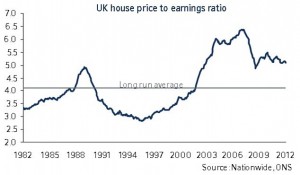
By David Craig, on April 20th, 2013 Yesterday I showed a chart of UK property prices and compared these to the current bubble in gold and silver prices. UK property prices are now around 5.5 times average earnings – down from a high of 6.5 times at the top of the market in 2007, but well above the long-term average of 4.2 times average earnings. So, are UK prices sustainable at their current levels?
Since the 2007/8 financial crisis, home prices have fallen much more in other affected countries. Ireland – prices down 50%: US – down 28%: Spain – down 22%. But in the UK and Italy prices are only down by around 10%.
Factors keeping UK prices up are the growing number of households due to immigration and divorce and a shortage of supply due to planning restrictions – Ireland, Spain and the US all had huge construction booms before the 2007/8 crash which led to an oversupply. There are also the Coalition’s desperate attempts to keep interest rates down and to shore house prices up till the next election in the hope that property price stability will win them votes.
There’s also an effect called “anchoring” which is shoring up prices. When prices of something increase, people get used to the higher price levels and see these as the “new normal”. And anyway, UK property prices seem to be increasing again. So, why worry?
Here are UK prices again:
And here’s a chart of US stock prices before and after the great 1929 crash:
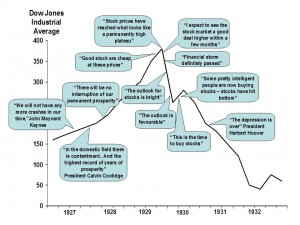
You’ll notice two things. 1. There are always lots of experts “talking up” the market 2. On the way down shares started to rise again. This is what’s called a “Fools’ Rally” – people have become so used to the “new normal” (higher prices) that they assume a 10% to 20% drop provides a wonderful buying opportunity. Invariably they are wrong.
House prices are always much “stickier” than share prices or gold prices so will respond much more slowly whether rising or falling than something like shares or gold which can quickly be bought or sold. And it’s almost certain house prices will continue to rise up till the 2015 election as the Coalition tries to create the illusion of economic stability while our national debt shoots up to unsustainable levels. So, no problem there.
But can property prices continue to defy gravity when Ed “borrow-borrow” Balls becomes chancellor and we have a massive financial crisis when the interest we pay on our national debt shoots up as markets lose confidence in chancellor Balls’s economic management? I don’t think so.
So, if you want to downsize, the next couple of years are the perfect time to do it. If you want to buy a bigger property, I believe you should wait 800 to 900 days to see how the dust settles after the delusional, buffoon Balls takes over.
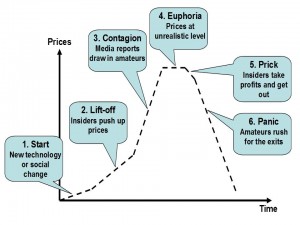
By David Craig, on April 19th, 2013 This is a bubble:

This is the way a bubble inflates and then bursts:
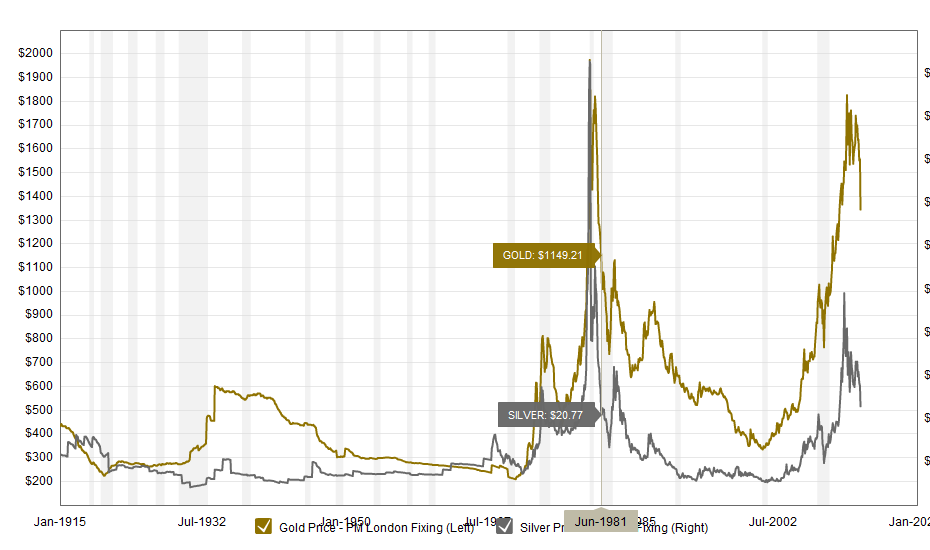
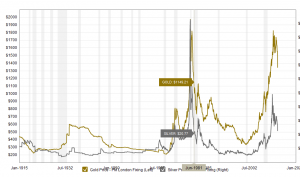
These are the prices of gold and silver – these look like bubbles:
This is the graph of UK house prices compared to average earnings. Are house prices at realistic levels held up by supply not satisfying demand? Or are we in a bubble supported by historically low interest rates?
And this is what might happen to UK house prices when Ed “borrow-borrow” Balls becomes chancellor, our national debt hits £1.7trn by 2017, markets lose confidence in the Miliband government’s financial competence, the interest we pay on our national debt shoots up, the rich move their money abroad, there is a collapse in the value of the pound and Ed “borrow-spend-waste” Balls is forced to push up interest rates and impose punitive taxes on our homes and savings to stave off national bankruptcy:

By David Craig, on April 18th, 2013 Today I’d like to show some pictures of what Britain will look like once hundreds of thousands (probably over a million) impoverished Romanians and Bulgarians move here.
Many will work hard:

So will their children:

Our town centres will be busy:

Very busy:

Our benefits system will shower money on the new arrivals:

They will use the money “earned” in Britain to build tasteful homes in their villages:

Oh, and here’s a photo of a policeman and a clown. Though, given how ineffective our politically-correct police are going to be protecting us from the coming crime tsunami, I’m not sure which is the policeman and which is the clown:

By David Craig, on April 17th, 2013 The four most important issues facing Britain are probably 1. Our rapidly rising national debt 2. Will we surrender our sovereignty to the corrupt, wasteful EU? 3. The tsunami of immigration from Romanian and Bulgaria about to overwhelm us 4. Will we commit economic suicide by sticking to the (totally unnecessary) carbon reduction targets in Ed Miliband’s ludicrous Climate Change Act?
On the subject of our national debt. As I’ve written before, this is increasing by £120bn a year, £329m a day, £14m an hour, £233,000 a minute, £3,900 per second. However, if you ask the great British public about this, over ninety per cent haven’t the slightest clue that our national debt is even going up. One piece of research is shown in the picture below:

An astonishingly gormless 70% of potential voters believe the Coalition is reducing our national debt. These dickheads (the majority of Brits) don’t understand the difference between “deficit” and “debt”. Then there’s another wonderfully stupid 21% who seem convinced that running a deficit of £120bn a year doesn’t add anything to our national debt. And finally, there’s a mere 9% who realise that if you keep borrowing, your debt increases.
Given the political and economic illiteracy of around 91% of Brits, I’m finding it difficult to think of anything to write here. If 91% of potential voters don’t understand that continuously borrowing money leads to greater debt, how are they going to make an intelligent choice at the 2015 general election?
In despair, I can only conclude that Ed “borrow-borrow” Balls will be our next chancellor and that when our debt hits 120% of GDP around 2017, 91% of British voters will be rather surprised when international markets lose confidence in Britain’s finances, the interest we pay on our national debt shoots up to unsustainable levels, the value of the pound plummets and that nice Mr Balls is forced to impose cripplingly punitive (confiscatory) taxes on the £4trn we hold in savings and pensions.
Still, looking on the bright side – anyone with savings will be impoverished so we really will all be in it together, apart of course from politicians, bureaucrats and bankers who will continue to plunder our money at will.
By David Craig, on April 16th, 2013 Today, I’ve got to be really really careful – it’s definitely ‘tiptoeing on broken glass’ time. One wrong word and I’ll be accused of racism by the usual politically-correct handwringers. So I’ll just show the official unemployment rates by the main ethnic groups and raise a couple of issues:

1. Unfortunately, these figures don’t split out Chinese as an ethnic group. If they did, I imagine that the unemployment rate amongst Chinese immigrants would be somewhere around one or two per cent.
2. Very interesting is the extremely high unemployment amongst Pakistanis and Bangladeshis (most of whom would be Muslims). I’m sure the professional handwringers would blame this high unemployment on racial discrimination rather than a disinclination to work and a tendency to prefer living off benefits in these two communities. But then, why is unemployment so much lower amongst Indians (most of whom would be Hindus)? After all, Pakistanis, Bangladeshis and Indians all come from the same geographical area and should suffer from similar levels of supposed “discrimination”. Could the high unemployment amongst Pakistanis and Bangladeshis and low unemployment amongst Indians suggest there are some cultural differences between Muslims and Hindus which make it more likely that Hindus will be employed? Could it be that Hindus value education and self-reliance, whereas ……..?
I know what I think. But I would probably be prosecuted by the police for expressing my opinion. With only around 2,000 burglaries happening in Britain every single day, our police apparently have plenty of time to persecute anyone daring to express politically-incorrect views – it’s much easier than catching burglars.
By David Craig, on April 15th, 2013 Yes I know Cameron is a spineless liar and I know Osborne is an incompetent, economically-ignorant buffoon who should have stuck to folding napkins in Selfridges (the only proper job he has ever had). But bad as Britain’s situation is, I think that anyone with even the slightest understanding of current affairs – about 6% of the population – will view with horror the thought that in 753 days this creature will become our next chancellor

How do I know that only 6% of the population have any knowledge of current affairs? Because a survey was conducted amongst voters asking whether they thought Osborne was reducing national debt, keeping it at about the same or increasing it by over £600bn. Only 6% of voters understood that Osborne was increasing national debt. A shocking 45% thought he was reducing our debt. That means 94% of voters don’t understand the difference between “deficit” and “debt”.
So what can we expect from Chancellor Balls? Probably a continuation of the Brown/Balls Spendathon – hundreds of billions borrowed and wasted and perhaps Britain even giving up its EU rebate to curry favour with Barroso. Then our interest payments will hit £80bn a year, we’ll no longer be able to borrow anymore and we’ll gave to go crawling to the Troika for a bailout.
Still, at least we’ll have the pleasure of seeing the repulsive Balls being forced to impose massive spending cuts to undo the damage he and Brown did when they tried to bankrupt Britain. Or will Balls cut at all? More likely he’ll raise taxes and then raise taxes and then raise taxes and just for good measure raise taxes once more. Under Labour we once had a top rate of tax of 98% – could Mr “borrow-borrow” Balls take us back towards those levels?
By David Craig, on April 14th, 2013 Our Government refuses to tell us how many Romanians and Bulgarians will come to Benefits Britain. So, I’ll tell you – between one and two million. How do I know? Because Italy and Spain have removed restrictions and there are 997,000 Romanians and over 70,000 Bulgarians in Italy and 920,000 Romanians and 170,000 Bulgarians in Spain. Given that Britain has more jobs and more generous benefits than Italy or Spain, we can expect at least a million (probably closer to two million) to come here.
And when they arrive, they can all get a helpful booklet from the Department for Work and Pensions (DWP) in their own languages which explains all the benefits they can claim (see below)

A worker in either country will probably only earn about £175-£200 per month. So here’s just a taste of what they’ll be given if they move to Benefits Britain.
The DWP says the average claimant (across all nationalities) receives £390 a month in housing benefits and £65 a month in council tax benefits. They can also claim £88 a month for their first child and £58 a month for any child after that. It means someone with three children could collect £660 a month in benefits – three times what they can earn working in their own countries. If they have five or six children, they’ll be pocketing what for them would seem a fortune. Then when you add in unemployment benefits, jobseekers’ allowance, disability living allowances and God knows what else, most Romanian and Bulgarian families will get four to five times as much in benefits in Benefits Britain than they would from working in their own countries. Plus they’ll get free schooling and free healthcare.
And this, of course, doesn’t include the huge amounts Romanians and Bulgarians can earn from sending their children out to beg or steal and which they can get from burglary, metal theft, faked car crashes and all sorts of other money-making schemes. And they can be secure in the knowledge that our useless, politically-correct police won’t act against them for fear of being called racist by the BBC.
So you have to wonder – why would any of the 29 million Romanians and Bulgarians remain in their own countries when they can live what will seem to them a life of luxury in Benefits Britain?
Of course, that nice Mr Cameron says he’s clamping down on people who move to Britain just for the benefits. But given that it’s Barroso not Cameron, who decides who can come to Britain and what benefits they can get, we can pretty much ignore anything Cameron promises.
|
|