|
|
By  David Craig, on June 17th, 2013 These are Sunnis (or they might be Shiites):

These are Shiites (or they might be Sunnis):

This is what happens when Sunnis and Shiites get together:

I believe most people in Britain haven’t a clue which are which: why they hate each other and why Britain should get involved in their internecine slaughter.
But our great leaders, David “Winston” Cameron and William “Winston” Hague, are salivating at the prospect of sending British arms to help one lot kill the other lot. Also, British troops are apparently in Jordan on “military exercises” and I’ve no doubt that Cameron and Hague are hoping to manufacture a “provocation” that will give them the excuse to send British troops into Syria. Then they can have their own Middle East war and become “great international statesmen” just like their hero Tony Blair.
At the moment the US is claiming it has evidence Assad has used chemical weapons. So, here’s a picture of Colin Powell from about 20 years ago assuring the UN that Saddam Hussein had chemical weapons:

Oh, and remember this?

Cameron and Hague, we don’t believe your lies and we don’t want your war. Let the Sunnis and Shiites slaughter each other over their differing interpretations of the Koran. Who knows, maybe in a few hundred years they might realise that they’ve been wasting their time and the whole thing was totally pointless? But in the meantime, it’s none of our business – it’s up to the Arab League to sort out the mess.
By David Craig, on June 16th, 2013 Like most people I just glance at the weather forecast. But this weekend I gave it particular attention as I’m up in London watching the tennis at Queens. On Friday, there was a great day’s tennis with four quarter finals including players such as Murray, Tsonga, Cilic, Hewitt and Del Potro. So, I thought I’d quite like to go and see the semi-finals, particularly as Murray was playing Tsonga.
I checked the weather forecast produced by the Met Office’s 2009 £30m supercomputer which can do 1,000,000,000,000 calculations per second. This is a supercomputer:

The forecast was for a dry day with the possibility of some light showers by late afternoon. So, I went onto the Queens website to buy some tickets. But before spending my £200, I looked out the window. For anyone who works at the Met Office, this is a window:

It’s a kind of hole in the wall, usually with glass. A window usually costs less than a £30m supercomputer and you can use it to see what the weather’s like.
What I saw, made me decide that it wasn’t worth buying tickets after all. Anyway, to cut a long story short. At about 13.15h the rain started bucketing down in London and continued till about 17.30h. This delayed the tennis from the scheduled 13.00h start to around 18.00h. Saturday was basically a washout.
On Saturday evening, I checked out the Met Office’s website for the finals on Sunday and noticed that the Met Office had their latest Saturday forecast available. In spite of the fact that it had rained cats and dogs in London from 13.15h to 17.30h, the wonderful Met Office were still predicting a dry afternoon with the possibility of a couple of light showers late in the afternoon. Just about exactly the opposite of what actually happened.
Our politicians seem to trust the Met Office’s predictions of Global Warming over the next hundred years or so. But as far as I can see, the hopeless, hapless, “barbecue summer” Met Office can’t even get their forecasts right even after the weather has happened.
But don’t worry, the Met Office has a plan. They want to buy yet another £30m supercomputer. I suggest they just try looking out the window every now and then.
By David Craig, on June 15th, 2013 Thomas Jefferson once said: “A government afraid of its citizens is a Democracy. Citizens afraid of government is tyranny!”
If we look at Britain’s useless over-paid, over-pensioned bureaucrats, the most distinguishing thing is that they are not afraid of us, the people who pay their massive salaries and pensions.
At the Bank of England, greedy (IMHO) buffoons Mervyn King, Paul Tucker and Charles Bean said nothing and did nothing as Brown and Balls wrecked the British economy by wasting more than £1.3trn of our money. But these three suposed “economic experts” became rich and will all retire with pension pots of £4m to £5m each, thanks to our enforced generosity.
At the NHS, we have the repulsive (IMHO) Sir David Nicholson:

He was apparently resposible for over 1,200 unnecessary deaths. Nicholson also seems to have had a very fat hand involved in spending million of our money to gag anyone who has dared try to blow the whistle on appalling neglect of patients in the NHS. The NHS also gave us the utterly useless (IMHO) Cynthia Bower. Bower was head of the strategic health authority that was responsible for the mid-Staffordshire hospital where some of the worst abuses took place. Laughably, she was promoted to head of the Care Quality Commission – responsible for patient care throughout the NHS.
At the BBC, a shameless succession of bureaucrats and fools have made millions while mismanaging the organisation and presiding over several billions wasted on useless computer systems and the farcical move to Salford. Now the pathetic chairman, Chris Patten, admits there has been massive greed and waste but brazenly claims that it would be “dangerous” to cut the bloated BBC’s bloated budget. And worse of all, this (IMHO) greedy, self-serving joke is taken seriously.
Two supposed regulators – Ofgem and Ofwat – have also distinguished themselves by doing nothing at all to regulate the energy and water markets while increasing their own budgets, salaries and bonuses every year including every year since the 2008 financial meltdown.
At HMRC the former boss, Dave Hartnett, seems (IMHO) to have been excessively keen to cut “sweethart deals” with big tax-avoiding companies and then left to join Big Four accountancy Deloittes, a company most associated with helping businesses and companies avoid the tax that Hartnett was supposed to collect while being generously paid by us.
Then there’s the extraordinary Lin Homer, former chief executive of Birmingham City Council. Ms Homer ran Birmingham from 2002 to 2005, when she was responsible for 57,000 council staff. But her period at the council was marred by a postal voting scandal which led a judge to order fresh elections in two Birmingham wards. Election judge Richard Mawrey said fraud in the city “would have disgraced a banana republic”. Ms Homer ran into fresh difficulties when she became Director General of the Immigration and Nationality Directorate and allowed hundreds of thousands of illegal immigrants to come to and stay in Britain. And now she is the new Permanent Secretary at the Department for Transport, earning £155,000 a year.
What do these (IMHO) sleaze-bags. self-serving fools and incompetent a**eholes have in common? They’re not afraid of us, the people they are meant to serve. They have power over us, they can do what they want, waste as much of our money as they want, steal as much of our money as they want and there are never any consequences. In fact, incompetence is always rewarded by promotion and huge wealth.
We have a new tyranny – the tyranny of the bureaucratic classes who are no longer afraid of us.
By David Craig, on June 14th, 2013 Most people know that youth unemployment in some European countries is approaching catastrophic levels (click on charts to see more clearly):

The problem for those now jobless is that, by the time the economy improves (7 or 8 years after the 2008 crash), a new generation of school and university leavers will be coming onto the jobs market. So, many of those currently unemployed may never get the jobs for which they are qualified.
The situation in Britain is not as bad as in other European countries:

But something worrying has happened in the British job market: the number of “over 65s” in the workforce (blue line and scale on the left) has gone up by 600,000 from 400,000 to 1,000,000. At the same time, the number of “16-24s” employed (red line and scale on the right) has fallen by about 600,000 from just over 4,200,000 to just above 3,600,000:

Two days ago, on this blog, I proposed we should be giving student grants to any “16-24s” who sign up to a practical, vocational course in bricklaying, plumbing, carpentry, electrician, car mechanic etc. Getting about 100,000 “16-24s” on these courses would only cost us about £1bn. The UK has just increased foreign aid by £2.6bn from £7.9bn to £10.5bn. If we just cut foreign aid (most of which gets stolen by corrupt Third World kleptocrats anyway) back to £9.5bn (well above what it was last year), we could get an extra 100,000 young people on courses that would give them skills for life and virtually guarantee them jobs for life. Surely they’re worth it?
By David Craig, on June 13th, 2013 The new governor of the Bank of England, Mark Carnage moves into his luxury offices in a few weeks. Carnage spent 13 years with Goldman Sachs in its London, Tokyo, New York and Toronto offices. His progressively more senior positions included co-head of sovereign risk; executive director, emerging debt capital markets; and managing director, investment banking. He was involved in Goldman’s work with the 1998 Russian financial crisis. Goldman’s role in the Russian crisis was criticized at the time because while the company was advising Russia it was simultaneously betting against the country’s ability to repay its debt.
Here’s a picture of Mark Carnage:

And here’s another one:

Obviously there are several things Carnage can do to get Britain out of its debt death spiral. But his choices can be simplified into two main themes: Does he hurt the ruling political and bureaucratic elites? Or does he cause huge losses to ordinary taxpayers?
Let me explain briefly. Carnage could try to hold the pound’s value, slowly increase interest rates to a “normal” level and force the Government (Coalition or Labour) to put through the kind of budget cuts I suggested in my blog yesterday. This is what Canada did in the mid 1990s when it cut its debt from 68% of GDP to 29%. But this would be unpopular with and painful for the ruling political and bureaucratic elites.
Carnage’s other option would be to hold interest rates at near zero, print loads of money, keep on buying ever-increasing amounts of the UK’s ever-increasing government debt and do this to the value of the pound:

This would push up prices for ordinary people, who don’t get paid as much as Mr Carnage, our politicians and top bureaucrats. But this would also help inflate away UK government debt. letting whatever government keep on spending and wasting our money, mainly on itself.
And this is what a “low interest rates plus high inflation” policy would do to our savings (blue car on the left) and pensions (red car on the right):

Meanwhile, as Carney does this to the pound:

His former chums at Goldman Sachs could make billions from shorting sterling, just as they did when “advising” Russia.
I think I know what Carnage will do. So, it will be party time for the ruling elites and Goldman Sachs bankers with their massive salaries and inflation-protected pensions and close to disastrous for the rest of us.
(I’ve reduced the price of my latest book GREED UNLIMITED – and there are “only” 900 left of the 1,000 I printed – so hurry hurry if you want a copy)
By David Craig, on June 12th, 2013 A couple of readers have challenged me to give an answer to the question of how we escape the debt death spiral I wrote about yesterday.
Firstly, as the Irish say, I wouldn’t start from where we are now – I would have started from the moment the Coalition got into power in 2010. But we are where we are. So, here are a few ideas (I’m afraid some of my proposals will upset Guardianistas. But Britain is as bankrupt as the loss-making Guardian newspaper, so we can’t go on spending more than we earn):
1. Declare a state of “national economic emergency” and put all public-sector and council managers and administrators on a 4-day week and all quangos on a 3-day week. After all, who would notice if the Department of Health only worked Monday to Thursday and the Equality and Human Rights Commission only did Monday to Wednesday? Saving £150m a week – £7.5bn a year
2. Set a maximum public-sector pension of twice the average wage and abolish the 3 years taxfree payments made to bureaucrats and top civil servants. Saving maybe £2bn a year
3. Stop all foreign aid till Britain eliminates its budget deficit and reduces its debt to 30% of GDP. Saving £10.5bn a year
4. Leave the EU – we can’t afford the cost of membership. Saving £19bn a year
5. Stop all subsidies to “green energy” and stop closing coal-fired power stations. Saving maybe £1bn a year. Resurrect Britain’s coal mines – extra tax revenues maybe £500m a year
6. Replace Corporation Tax with a retention of part of the VAT charged by companies so that all companies operating in Britain pay tax whether they claim to be based in Jersey, Cayman Islands or on The Moon. (Financial institutions would pay a tax based on their assets). Increase in tax revenues maybe £13bn a year. This would also result in many foreign firms moving their HQs to Britain creating say 10,000 well-paid jobs and generating say £3bn in extra income tax and NI
7. Declare activity sectors like energy, water, airports and ports as “strategic national assets” that can only be owned by British companies fully based in Britain for tax purposes. Increase in tax revenues, perhaps £3bn a year
8. Bring in a False Claims Act whereby whistleblowers who reveal that government departments are being overcharged receive a % of all money saved. Saving of say 1% on the government’s procurement bill of £170bn = £1.7bn
9. Bring in a scheme whereby public-sector, frontline workers (not managers) get paid a % of any money saved through a suggestion scheme up to a maximum of £50,000 per worker. Saving perhaps 1% of government spending of £500bn = £5bn
10. Set a mandatory improvement target for all public-sector managers of a very modest 2% a year. Saving in 1st year = £10bn: in 2nd year £20bn and so on
11. Cut the BBC’s budget by 5% a year for 5 years and restrict the BBC to making public-service programmes, not junk entertainment that belongs on the increasing number of commercial channels. Saving in 1st year = £150m: 2nd year = £300m: 3rd year = £450m and so on
12. Lower housing benefit by 1% a year and the cap by 5% a year for 2 years to force down rents across the private rented sector. Saving maybe £260m in 1st year: £520m in 2nd year and so on
13. Cut the number of MPs, MSPs, members of the Welsh and Northern Ireland Assemblies and their staff by 50%. Reduce the Lords to 100 members from over 850. Saving maybe £500m a year. Sell off Portcullis House earning maybe £300m
14. End the culture of breeding at taxpayers’ expense – only give child benefits to the first 2 children: restrict social housing and housing benefit to people over 25: house anyone, who cannot live with their parents, in army-like barracks where they have to work (cleaning and so on) to earn privileges like TV. Saving maybe £3bn
15. Stop us being bankrupted by immigration – withdraw from the European Convention on Human Rights: extend restrictions on Romanians and Bulgarians for 10 more years: tighten habitual residency rules: deport all foreign criminals: no benefits to be paid to anyone who is not a British citizen or who has not worked full-time in Britain for 10 years. Saving maybe £5bn a year
16. Restrict citizenship – make the right remain and granting of British citizenship signed legal agreements between the government and the person, whereby it is agreed that any breach of the law by that person or any dependent results in automatic withdrawal of the right to remain in Britain and immediate deportation. Saving maybe £2bn a year
17. Give student grants to anyone aged 16 to 24 who goes on a vocational course to become a plumber, electrician, car mechanic, carpenter, bricklayer etc. Cost maybe £1bn
18. Impose a land tax on any development land that has been held for more than 3 years by a developer who has not built anything. Launch a programme to build 100,000 housing association homes a year on brownfield sites. Cost perhaps £4bn, but increases in revenue from income tax and NI and reduction in unemployment payments saving perhaps £1bn
We’re getting close to £90bn saved. Then hopefully economic growth would increase tax revenues by say 5% (£30bn) and that gives us the £120bn we need to eliminate the £120bn deficit.
But then we need to start paying down the debt of £1.2trn – that’ll have to wait for another day.
(Just a reminder – I’ve reduced the price of my latest book GREED UNLIMITED – paperback and Kindle versions – hopefully someone somewhere will now buy a copy or two)
By David Craig, on June 11th, 2013 I challenge anybody to go to this website of our rising national debt and watch it go up without feeling extremely nauseous https://www.nationaldebtclocks.org/debtclock/unitedkingdom
As the Tories claim we’re on the road to recovery and Ed Balls announces he can save £200m by cutting benefits to any pensioners who have more than fifty quid in the bank, the figures tell a different story. We’re caught in a classic death spiral of borrowing leading to higher interest payments leading to more borrowing leading to more interest payments…………..and even if economic growth meant that taxes collected by the government went up by a fanciful 3% (£20bn) a year, our debts would still increase for at least the next 5 years and probably for the next 10 years as public spending is also going up.

The numbers are almost too huge to grasp – our debt is increasing by around £3,888 per second: £233,000 per minute: £14,000,000 per hour: £329,000,000 per day: £2,300,000,000 a week: £120,000,000,000 per year.
But, rather than bleating on about the problem, what’s the solution? There are 3 main options:
1. The Government cuts public spending by about £100bn from £750bn a year to £650bn a year. This would probably lead to massive civil unrest and would be totally impossible for any government that wants to be re-elected
2. Britain defaults and tells its creditors to get stuffed. This would actually be easy to do. Many countries have defaulted and recovered quite quickly. The problem is that this would destroy many foreign banks, British banks and insurance companies that hold almost £1,000,000,000,000 of UK government debt. Moreover, it would leave us unable to borrow and we’d be forced to cut public spending down to £650bn to match tax revenues as in option 1 above – impossible to do without causing civil unrest.
3. That just leaves one way out of the death spiral – the problem is that nobody knows what this is.
(Just a reminder – I’ve reduced the price of my latest book GREED UNLIMITED – paperback and Kindle versions – hopefully someone somewhere will now buy a copy)
By David Craig, on June 10th, 2013 I made a comment on a newspaper website the other day suggesting that people grabbing buy-to-let properties were making a negative contribution to the economy. Sure enough, I was subjected to a torrent of abuse including one reader who called me “a stupid little moron”. So let’s look at a few facts:
On TV and in the press we’re constantly being told that buy-to-let properties are the place to put our savings. With interest rates below the level of inflation, most pension funds charging huge fees but not giving any growth and the Government reducing access to the state pension, it’s understandable that people with a bit of spare cash are turning to property for an income and for their retirement.
And now, the Government’s Funding for Lending and other schemes to keep mortgage rates low and house prices high until the next election are making buy-to-let even more attractive.
But are these people providing a service by renovating and renting out houses and flats? Or are they just profiteers and parasites, pushing up house prices and then living off those who can’t afford to buy their own homes?

I think there are about 14.5 million homes in England (I don’t have the figures for the UK). Of these 14.5 million, around 3.6 million (a quarter) are buy-to-lets. If we assume that the average buy-to-let is costing £500 to £700 a month, this means that renters are paying somewhere between £1.8bn and £2.5bn a month (£22bn to £30bn a year) to live in someone else’s property. That’s £22bn to £30bn a year being taken mostly from the less well-off and put directly into the pockets of the better-off. Or £22bn to £30bn being taken mostly from younger people starting out in their careers and given mainly to older people who have managed to accumulate a bit of capital. Buy-to-lets add nothing to our national wealth. They produce nothing that can be sold abroad. They just move money from one section of society to another, from one generation to another. Moreover, as they account for about a quarter of home purchases, they push prices up beyond the means of many (younger?) people.
At the moment, buy-to-lets seem to be profitable investments for the lucky few – at least that’s what gushing BBC presenters and newspaper property writers claim. But there are at least two threats to the buy-to-let paradise.
Firstly, the government, particularly a Labour government, might start to impose rent controls in a bid to reduce the ever-increasing cost of housing benefits:
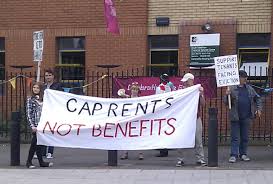
Housing benefit has shot up from around £10bn in 2003 to £21bn last year and is expected to hit £25bn by 2015. This is unsustainable. And this projection doesn’t even take account of the one million Romanians and Bulgarians heading to Britain from January 2014.
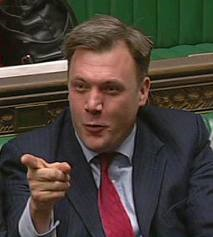
And secondly, when Labour get back into power in 685 days and the deluded Ed Balls goes on a Brownian spending spree, he’s going to need money – lots of it. And there, ripe for the picking is £22bn to £30bn being taken by buy-to-let owners.
Buy-to-let owners beware – it’s not unlikely that, under the banner of “fairness”, the repulsive (IMHO) Balls may be coming after your money. After all, there’s not much else left for our incompetent, wasteful, financially-incontinent governments to tax. Mr Balls may make you rue the day you ever entered the buy-to-let market
By David Craig, on June 9th, 2013 I’ve just reduced the price on both the paperback and Kindle editions of my latest book GREED UNLIMITED by about two quid. Perhaps a few people would now show their support for this website by buying a few copies? Just a thought.
By David Craig, on June 9th, 2013 As the much revered Nelson Mandela goes back into hospital, many South Africans must fear for their future. There is no danger of the country descending into the kind of civil war so beloved of most African countries. The danger to South Africa is widespread corruption practised by the political and bureaucratic classes. This corruption ensures that the rich get richer while the vast majority of South Africans live in grinding poverty in shacks without running water or electricity.
A new report called The Real State of the Nation published this year concluded that South Africa is fighting a losing battle against corruption. “Corruption is rampant,” the author of the report said, “It’s out of control … And the dedicated units that have been created to fight financial misconduct are in essence fighting a losing battle.”
A former managing director of the World Bank Mamphela Ramphele recently said, “A culture of corruption and impunity is seeping through every level of government, corroding our entire society. It is estimated that corruption robs us of more than R30 billion ($3.34 billion) from our government’s budget every year.” Substantiating her point, Ramphele queried where the country could be if R30 billion a year was spent on schools, bridges and roads, rather than being lost to corrupt practices.
One of the most newsworthy possible scandals was 206 million rand ($22.98 million) of state funds used on President Jacob Suma’s private compound in his home village of Nkandla, in KwaZulu-Natal province. Inevitably, a government inquiry found that this money had only been used for security upgrades and related costs at the president’s private compound (not for any home improvements) and that this decision was based on an assessment of threats to Zuma. Well, I guess that the president should feel pretty safe with $22.98 million spent on security for his home – that’s an awful lot of bullet-proof windows, security cameras and burglar alarms.
Fortunately (for the corrupt), thanks to a new media bill passed a month or so ago by an overwhelming majority in the South African parliament, in the future politicians and bureaucrats shouldn’t be embarrassed by so many news stories revealing their venality. The “secrecy bill” will increase the government’s power to restrict access to information and impose hefty fines and jail terms on reporters who publish information the government classifies as secret. Like President Zuma’s home improvements, perhaps? Sorry, I meant security for his home.
Here’s a picture of South Africa’s former president Nelson Mandela:

And here’s one of South Africa’s current president Jacob Zuma:

One of these men is respected around the world for his integrity. The other is said to be very rich. Can you guess which is which?
|
|