|
|
By  David Craig, on October 21st, 2013 Our masters in Westminster claim that they have a target to bring inflation down to around 2%. But I’ve been flicking through the laughably-named Office for Budget Responsibility’s (OBR) 189-page Economic and Fiscal Outlook and found a very different story.
There are two main measures of inflation RPI (Retail Price Index) and CPI (Consumer Price Index). There are two main differences between RPI and CPI. Firstly, RPI includes some things like housing, council tax, road tax and TV licence which are not in CPI. And secondly, the RPI is an “arithmetic” mean whereas the CPI is a “geometric” mean (explanation here https://www.significancemagazine.org/details/webexclusive/1314363/RPI-versus-CPI—The-Definitive-Account.html) Apparently this difference in the way of calculating inflation will always make the RPI around 1% higher than the CPI.
The supposedly independent OBR predicts that CPI will fall to the targeted 2% by 2016. Although, given that the Bank of England predicted achieving 2% every quarter for about five years and never achieved this, we shouldn’t take the supinely subservient OBR’s forecast too seriously. But what is interesting is the Government’s, sorry I meant the OBR’s forecast for RPI. This is expected to go in exactly the opposite direction to CPI (see chart)
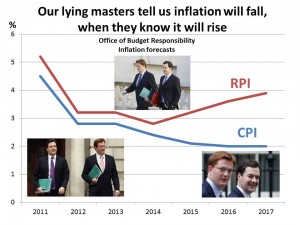
This rise is quite important for us. Firstly because inflation erodes the value of our savings. If we had £10,000 in 2010, according the CPI, this would buy £8,280 worth of goods by 2017. However, using RPI, our £10,000 would only buy £7,740 of goods by 2017.
Moreover, when working out how much money to take from us or give back to us, the Government chooses whichever of the two inflation measures suits it best. So, when telling us how high inflation is, the government uses the lower CPI to make it look like they are in control of the economy. It also uses the lower CPI for the indexation of most tax rates, allowances and thresholds, in order to take more money from us, and for the uprating of benefits and public-sector pensions, in order to give less money to us. However, the Government uses the much higher RPI for things like student loan payments and the revalorisation of excise duties in order to get more money from us.
Oh, and thanks to a reader for pointing out that the Bank of England uses RPI (the higher index for inflation) when calculating what its staff should get each year with their pensions.
As for the supposedly “independent” OBR – for a financially-incontinent British government, that is doubling our national debt in just five years from £700bn to £1.4trn, to create an “Office for Budget Responsibility” is a bit like Democratic People’s Republic of North Korea creating an Office for Freedom of Speech and Human Rights.
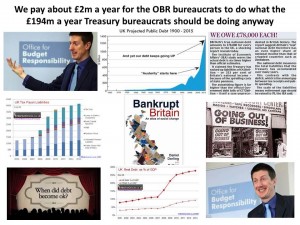
By David Craig, on October 20th, 2013 The leaders of the Coalition tell us that their policies are working, that Britain is on the road to recovery and that they just need a bit more time to “finish the job”. But what job is that? Saving the British economy? Or completing Brown’s and Balls’s highly successful project to bankrupt Britain? To find out, why not take our “Bankrupting Britain” quiz?
1. By how much is our national debt increasing every minute of every day? A: £2,300 B: £23,000 C: £230,000
2. Under the Coalition’s “austerity” plans, what will happen to public spending between now and the 2015 election? A: Go down by £60bn B: Stay flat C: Go up by £60bn
3. If Cameron and Osborne win the 2015 election and continue their “austerity” programme, what will happen to public spending by 2018? A: Go down by £90bn B: Stay flat C: Go up by £90bn
4. By the 2015 General Election, our national debt per private-sector worker will be? A: £600 B: £6,000 C: £60,000
5: As teachers strike for better pensions, how much do generous, inflation-protected public-sector pensions cost each private-sector taxpayer? A: £32/year B: £320/year C: £3,200/year
6: As teachers strike for better pensions, how much will generous, inflation-protected public-sector pensions cost each private-sector taxpayer by 2018? A: £64/year B: £640/year C: £6,400/year
7. How much would you or I have to save each year into our pension to get the same pension as an MP? A: £20,000 B: £40,000 C: £60,000
8. The interest we now pay each year on our national debt is equivalent to the annual budget of? A: The police B: The police and the military C: The police, the military and schools
9: There are about 920,000 Romanians and 170,000 Bulgarians in Spain and about 997,000 Romanians and over 70,000 Bulgarians in Italy. Britain has much more generous benefits and more jobs than Spain or Italy, so how many Romanians and Bulgarians will flood into Britain? A: Don’t know (that’s what the government claims) B: At most 50,000 (as a couple of ministers have admitted) C: 1,500,000 (my estimate)
10: David Cameron’s April 2013 increase in foreign aid of £2.6bn from £7.9bn to £10.5bn a year is enough money to pay for? A: The 40,000 troops being fired to save money B: The 32,400 police being fired to save money C: Both the 40,000 troops and the 32,400 police being fired to save money
11. Trick question – Which of these pictures most accurately reflects our economic situation?

Answers: 1 – C 2-C 3-C 4-C 5-B 6-B 7-C 8-C 9-C 10-C 11 – All of them
By David Craig, on October 19th, 2013 A reader sent me an interesting comment/question on yesterday’s blog about our rip-off energy companies: “I’m normally with you David but this one makes me uneasy. Are you saying that a profit of 22% is too much and that governments should step in whenever a company makes that kind of profit? Where would you draw the line on this? 10% 15% 20%? Does this apply only to energy companies or to businesses in all sectors? There’s more to all this than meets the eye. There’s clearly a margin for competition to come along and undercut there but it seems that it isn’t happening. Why not?”
The reader seems to be asking two main questions: 1. What profit levels should the energy companies be allowed? 2. With such high profit margins, why is there not more competition?
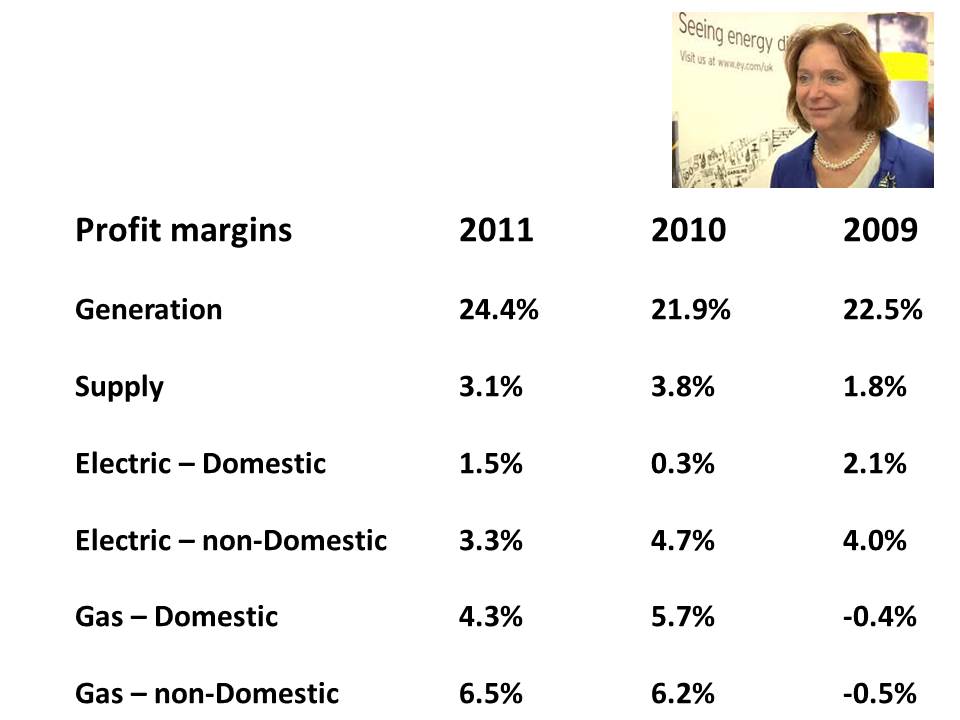
Let me deal with the 2nd question first – why is there not more competition? The energy business consists of two main parts – “upstream” which is power generation and “downstream” which is power transmission and supply to customers. What the Big Six companies do is push up their profit margins to at least 24% on the “upstream” part (power generation)
This has two wonderful consequences;
1. They can claim they make small profits They charge themselves so much for the power they produce (or gas they supply to themselves) that they can only make a small profit – about 5% – on their “downstream” business. So, when they raise prices as they do every year, their PR people can come on TV and claim that they make very little profit (5% or so) while conveniently forgetting the massive profits made in the “upstream” part which is about two thirds of their costs
Oil companies play a similar game – pushing their profits into “upstream” (oil extraction) so they can claim they make very small profits on their filling stations.
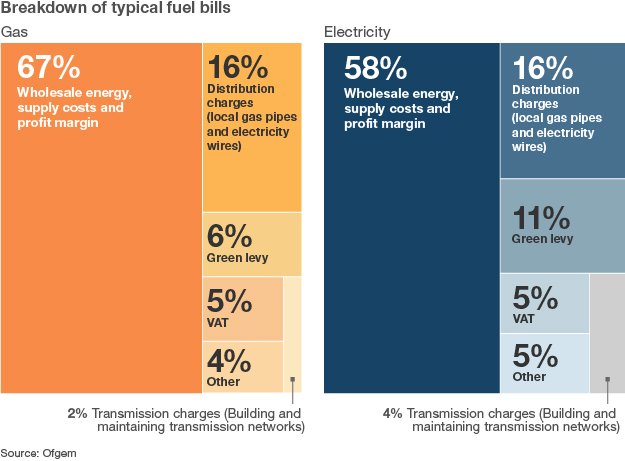
2. They keep out competition It’s very difficult for a new competitor to enter the “upstream” business as it costs so much to build a new power station or gas platform. Competitors can easily enter the “downstream” part. But they have to buy their power and transmission from the Big Six. As the first chart shows, the Big Six charge so much for power (where they make their 24% profit margins) that the profit margins on “downstream” are very small, giving little room for would-be competitors to undercut Big Six prices.
So, when our useless politicians tell us to switch suppliers, we’ll actually save very little as the Big Six have stitched up the market between them.
As for the first question What profit margins should power companies be allowed? When an essential service like power is being controlled by an oligopoly of just six (mainly foreign-owned) companies, then there is a need for a real regulator (not the worthless Ofgem) to prevent market abuse. I believe that companies like French EDF, Spanish Iberdrola and German E.0n are only allowed to make profits of somewhere between 3% and 5% in their home markets. But according to my calculations, they’re making about 17% in Britain – 3 to 5 times as much as they’re allowed in their home markets, which of course is why foreign companies are so keen to buy Britain’s “cash cow” energy companies
As for the future of our energy prices, it’s going to be a case of up, up, up thanks to the horror of the ludicrous Climate Change Act which was supported by all three major parties.
The current “strike price” for electricity is around £44 per MWh. But the offshore wind generating companies (mostly foreign) are going to receive £155/MWh (ie more than THREE times as much) for their intermittent totally unreliable electricity!
Wave and tide generated electricity will cost us £300/MWh – ie SIX times the current price. And nuclear will be at least twice the current price and probably much higher.
And the deranged Ed Davey tells us that his Green policies will result in a reduction in fuel bills of £144p/a by 2020.
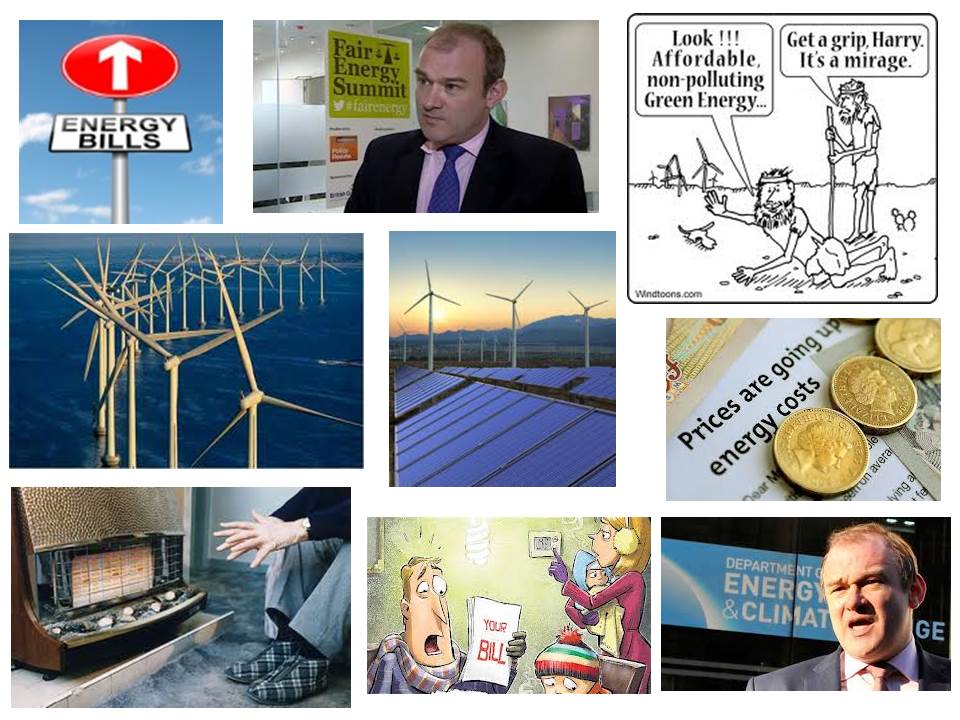
By David Craig, on October 18th, 2013 As the energy companies push up their prices by 8% to 10% just before we all turn our central heating on, we’ve heard the usual lies about how they’re forced to increase prices due to the rising cost of wholesale energy. So, let me tell you the truth. When wholesale prices rise, our bills rise. When wholesale prices fall, our bills do not fall. We are being fleeced.

But what about Ofgem, the supposed regulator? Like all our useless, self-serving supposed regulators (Ofwat, Ofcom, the FSA, the FCA, the Care Quality Commission, Monitor etc), Ofgem has been looking after itself. Ofgem’s budget doubled from £38.8m in 2006-07 to more than £78.7m by 2012. But Ofgem has done little to nothing for us, the people it is meant to protect from the predatory energy companies.
Meanwhile the energy companies have been making eye-watering profits from us. EDF – a company 83% owned by the French government – made profits of £1.58bn on a turnover of £7.1bn – a profit margin of an astonishing 22%. Of course, the energy companies claim they only make 5% profit on their energy supply businesses. But this completely glosses over the fact that they also generate electricity which they then sell to their supply businesses. So, while the supply businesses may only be making a profit of this modest 5%, their generating businesses are coining it in.

Iberdrola, the Spanish company that owns Scottish Power, made so much money in Britain that it loaned £800m to one of its US subsidiaries when American regulators – real regulators not like our worthless Ofgem – put pressure on the subsidiary to stick to its investment commitments.
So, don’t believe the energy companies’ lies and don’t believe their subservient politicians’ lies. We are being fleeced by the Big Six energy companies. Britain is one of the most lucrative markets for energy companies. That’s why so many foreign companies have bought our energy suppliers – they can make four to five times as much profit in Britain than they can in their own properly regulated home markets.

By David Craig, on October 17th, 2013 The West is moving towards negotiating a deal with Iran’s new leader, the one the Islamophiliacs at the BBC call a “moderate”. This deal will probably be heralded as a “great breakthrough” and as bringing a “new era of peace” to the troubled Middle East. But in fact it will probably allow Iran to develop its first nuclear weapon. And when it does and attacks Israel, all those who allowed this will express shock and surprise. So it might be worth looking at what is really happening behind the scenes.
These are the key movers and shakers in Iran

There’s the former president Mahmoud “Mad” Ahmajinedad who has repeatedly pledged to wipe Israel off the face of the earth. Then there’s the nice new “moderate” president Rouhani with his happy welcoming smile as he thinks back through all his fond memories of when, as Iran’s chief negotiator on its nuclear weapons programme, he lied to and fooled the West for years to buy Iran time to get its hands on the bomb. And there’s the Supreme Leader Ayatollah Khamenei who calls the shots and decides what really happens. Ayatollah Khamenei should not be confused with Ayatollah Khomenei (that’s his picture in the background) who did more than any other person to take Iran from the 20th century back to the Stone Age.
Here’s what the boss, Ayatollah Khamenei, really thinks: “Israel is a cancerous tumor in the Middle East. Israel is a satanic media outlet with bombers. Every Muslim is required to arm themselves against Israel.”
“I have already noted the usurper state of Israel poses a grave threat to Islam and Muslim countries. Islam and Muslim states must not lose this opportunity to remove the corruption from out midst. All of our problems are because of Israel – Israel of America. The first step should be the absolute destruction of Israel.”
Like most Arabs, Khamenei blames Israel for everything that is wrong in the Arab world. Here’s a map of the Middle East

Yup, you can hardly see Israel as it’s so small. The land area of Israel is just 21,000km2 compared to 6,042,000km2 for the main Arab countries that surround Israel. So the Arab countries are 288 times larger than tiny Israel. The population of Israel is just 7.9 million (about the same as the population of Cairo) compared to 279 million for the major Arab states. Yet somehow, in the warped minds of Khamenei and most other Arab clerics and leaders, tiny Israel is responsible for all the problems in the Middle East. And the Islamophiliacs at the BBC swallow this ludicrous story.
I believe psychologists call this process of blaming others for our own self-induced problems “Attribution”. To continue to do this is a sign of a severe personality disorder and even mental instability. And we’re about to let psychotics have nuclear weapons?

By David Craig, on October 16th, 2013 Paris used to be a wonderful place to visit

But it has now been over-run by East European beggars

East European pickpockets

And East European muggers

After January 2014, this plague of locusts will move to London and most other major British cities.
Thanks Mr Cameron and Mr Clegg
(If you have any friends living in France, please send them a link to today’s post so they can see the image foreigners are getting of their once wonderful capital city)
By David Craig, on October 15th, 2013 I’m sure all readers will know about our politicians’ attempts to muzzle a free press here in Britain. Desperate to get revenge on the newspapers for publishing stories about MPs’ expenses, the liars and thieves in Westminster are using the excuse of the phone-hacking scandal to restrict what papers can publish.
But a much more chilling attack of our freedom of speech has just come from the EU. A news website in Estonia published a piece that criticised a ferry company which changed some routes. Like most websites, this one had the facility for readers to leave their comments. Apparently, quite a few readers left rather unflattering (potentially libellous) comments about the said ferry company.
Like most websites, there was a function on this one where anyone unhappy with any comments could report them to a moderator, who could then choose to delete them. A shareholder in the ferry company didn’t use the “report comment” facility. Instead they wrote to the website asking for the defamatory comments to be removed. The website removed them as soon as it got the letter of complaint, but by that time the comments had been displayed for about 6 weeks.
The shareholder then sued the website for defamation, even though the shareholder could have had the comments removed immediately by using the “report comment” function. The case went to the European Court of Human Rights (ECHR) which ruled in favour of the shareholder against the website. The ECHR judgement reads like a line out of a Kafka or Orwell novel:
“The court considers that the applicant company, by publishing the article in question, could have realised that it might cause negative reactions against the shipping company and its managers and that, considering the general reputation of comments on the Delfi news portal, there was a higher-than-average risk that the negative comments could go beyond the boundaries of acceptable criticism and reach the level of gratuitous insult or hate speech.”
“It also appears that the number of comments posted on the article in question was above average and indicated a great deal of interest in the matter among the readers and those who posted their comments. Thus, the court concludes that the applicant company was expected to exercise a degree of caution in the circumstances of the present case in order to avoid being held liable for an infringement of other persons’ reputations.”

Prior to this ruling by the ECHR, news (and any other) websites could rely on the fact that they had a “report comment” function to avoid liability for any defamatory comments posted by readers. Following this ruling, websites are expected to anticipate which stories might attract negative comments from readers and then to actively moderate all comments on such stories before they are posted.
If this ruling is upheld in the ECHR’s Grand Chamber, it will put a crushing extra workload and thus financial burden on websites and will inevitably lead to severe restrictions on us plebs’ ability to comment on what our masters are up to.
Surprisingly, this important story was picked up by the sycophantically pro-EU, socialist Guardian https://www.theguardian.com/media/media-blog/2013/oct/11/online-comments-websites-court-ruling-Estonian
Welcome to the EUSSR

By David Craig, on October 14th, 2013 In Sunday’s Torygraph, there was an article quoting an EU study showing there were over 600,000 Non-British EU citizens claiming unemployment and other benefits in Britain. The Government claims it doesn’t know how much we pay these people in benefits as their nationality is (conveniently for our masters?) not recorded when they claim their benefits. However, we do know that the level of unemployment amongst some European nationals living in Britain is quite high:

Moreover my back of a fag packet calculation suggests that these people, the vast majority of whom will never have contributed anything to our country in taxes, are costing us somewhere between £6,000,000,000 and £12,000,000,000 in benefits a year. That’s enough money to pay for around 200,000 nurses or police or troops. What they’re costing us in schooling, healthcare, policing, social services, translation and many other costs doesn’t bear thinking about. Curiously, the costs of these unemployed EU migrants are never mentioned by those (the BBC and the Labour Party) attacking the budget squeeze on the NHS, the police or the military.
Furthermore, we know that unemployment amongst ethnic communities is much higher than for British

Also in the newspapers was a heart-warming story of a lady from an Asian background whose life was saved through receiving a kidney transplant from a baby that had just died of heart failure. So in today’s blog, I’d like to shine a little light on a rather sensitive side of the immigration debate – the participation of ethnic minorities in kidney transplants in British hospitals, both as donors and receivers.
Accepted research has shown that people from Asian and Afro-Caribbean communities are 3 to 4 time more likely to suffer from kidney failure than white British . This is due to a much higher prevalence of Type 2 Diabetes amongst the UK’s Asian and Afro-Caribbean population. This has led to a situation where these two communities make up 8% of the population but 23% of those waiting for a kidney transplant. Yet these communities only account for less than 3% of all kidney donations.
The Asian community accounts for just 1% of donations, but 8% of all recipients and 14% of those on the waiting list for a transplant. The Afro-Caribbean community provides less than 1% of donations, but 3% of recipients and 6% of those on the waiting list for a new kidney.

The situation for donations of other organs would reveal a similar picture. To quote a study conclusion: “The UK Potential Donor Audit shows a 32% family refusal rate for White families and 74% refusal rate among non-White families when asked if they would donate organs.”
If we are ever to have an honest debate about whether uncontrolled immigration is good for or harmful to Britain, we need to have the facts about what immigration costs us and what contribution immigrant communities make. As far as their overall levels of economic activity or things like kidney transplants are concerned, our main immigrant communities seem to get an awful lot more from Britain than they contribute.
By David Craig, on October 13th, 2013 A reader sent me the following comment “Having read your fantastic blog for quite some time, and being 86, death holds no fear for me, because I have come to the conclusion, that, with very few exceptions, every bastard on this planet is out to screw me.”
That really makes me seem like the most miserable, cynical person on earth.
I try not to be too negative, but I think there has been a dramatic change in morality in Britain over the last 30 years. And perhaps I notice it more than many people because I lived abroad for 20 years till about 6 years ago.
When I grew up, in the public sector and even in business, there were many people who felt that their jobs were not just a way of accumulating as much money as possible. Instead many had a sense of duty and got satisfaction from contributing to whatever organisation or company they worked for. As I describe in my latest book GREED UNLIMITED, I think that basic morality and decency have gone. Whether in politics, business, banking, the BBC or in the public sector, greed seems to have taken over from a sense of duty and a job well done. So, we see politicians, business bosses, bankers, BBC executives, council and NHS bosses all avariciously filling their pockets with as much of our money as they can and none of them (hello Sir David Nicholson) giving a damn about the damage they do to other people while feathering their own nests. At almost all levels in almost all organisations, whether private or public, we have become a shameless society. And that’s why we see so many scandals in so many areas with the guilty always avoiding any remorse or punishment.
Are they all just lying, thieving, selfish, hypocritical, self-serving, arrogant scum?

I also have the impression that the British sense of decency and fair play still lives on in countries like Australia and New Zealand. And there is something similar in Holland and some Scandinavian countries. But sadly it has almost completely disappeared from Britain.
Anyway, to lighten things up a bit, here’s a short (3 minutes) YouTube clip from a Harry Enfield show where Enfield explains how the banking crisis happened and how taxpayers were left to foot the bill for the bankers’ greed and incompetence https://www.youtube.com/watch?v=ZiJa9diJOMk Enjoy.
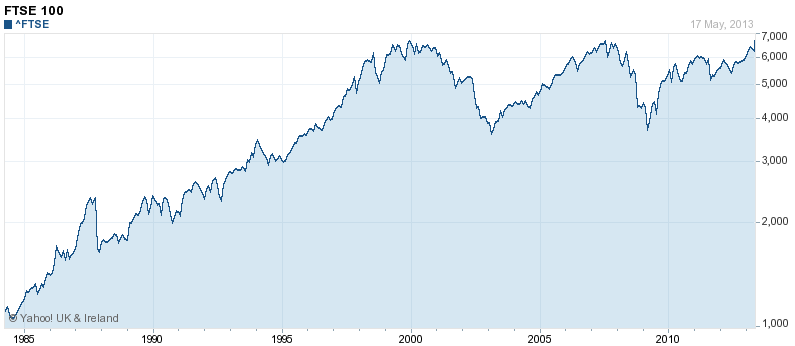
By David Craig, on October 12th, 2013 This is a typical chart of how stock markets perform over time. This is the FTSE100 (the largest 100 public companies in Britain).
And here is the FTSE250 (the next 250 companies below the FTSE100)
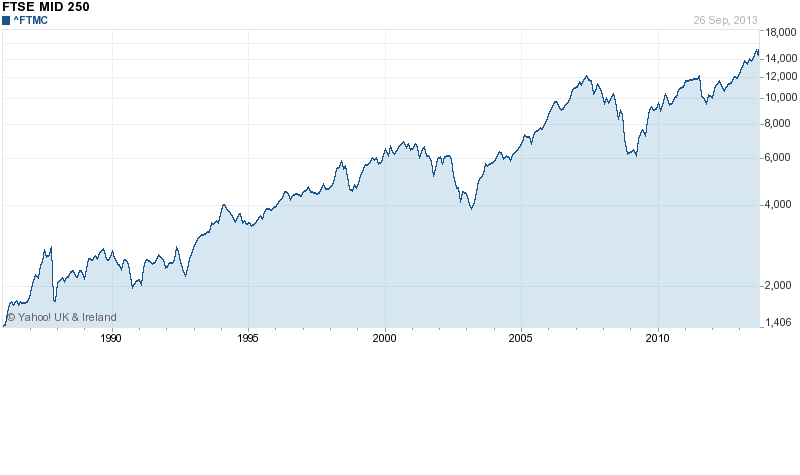
What do you notice? Apart from a few blips, the value of shares goes up and up and up. Yippeee! We can all be rich!
In fact, when the FTSE100 recently reached 6600, many personal finance journalists were blethering on about “record highs” and even predicting the FTSE100 could reach a dizzy all-time record of 7000 by the end of the year.
With many savers getting next to no interest on their bank deposit accounts, hundreds of thousands of normally risk-averse people (often pensioners) have been persuaded by charts like this, by financial advisers and by personal finance journalists to move their savings from bank and building society accounts paying paltry rates of interest into shares, usually by putting their cash into unit trusts.
Here are unit trusts sales for the last 10 years:
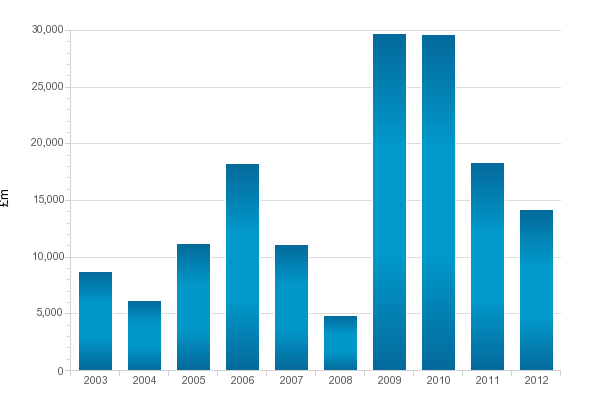
You’ll notice a leap in the money going into unit trusts when interest rates collapsed in 2008/9 following the financial crisis.
So, what’s the problem? After all, it looks like lots of people have sensibly shifted their savings from banks paying little to no interest to shares which just keep on going up and up and up.
Well, the problem is that once you take inflation into account, shares don’t go up and up and up. In fact, they go down and down and down. The red line on the chart below shows how the real value (after inflation) of shares has crashed since 2000:
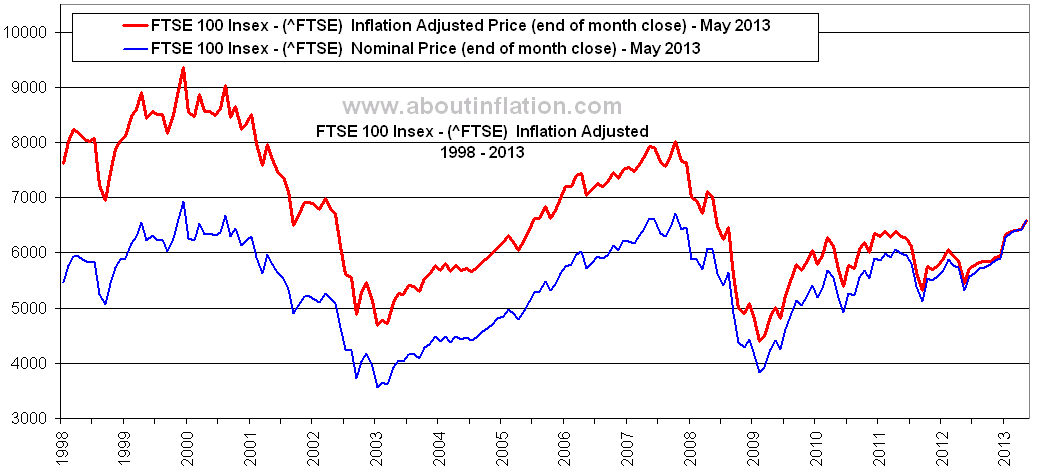
The blue line is the “nominal value” of shares – that’s the number that financial advisers and personal finance journalists like to use to convince us that shares are a good bet for our savings.
Looking at the red line, you’ll see that the FTSE100 is not at “record highs”. In fact, the FTSE100 would have to hit 9000 to get back to the level of 13 years ago – and that’s not going to happen.
In the 6 years from 2003 to 2008 (inclusive), savers put an average of £10bn a year into unit trusts. In the 3 years from 2009 to 2011, this more than doubled to £23bn a year. So, over these 3 years an extra £39bn poured into unit trusts. This extra £39bn will earn around £1.2bn a year for financial advisers, unit trust salespeople and unit trust managers. But it will make ordinary savers an awful lot poorer.
The real advantage of buying shares (rather than having your money in a bank deposit account) comes from the dividends paid by the companies whose shares you own. These make up around 80% of the returns you’ll get from owning shares. But if you’re putting money into shares either directly or through a unit trust because you think share values go up and up and up, just remember most of the journalists writing in the Money sections of newspapers know that the value of shares is falling and they are just lying shysters earning a living by convincing financially-ignorant punters to put their money into the unit trusts that are the biggest advertisers in their newspapers.
(Of course, if you want to learn more about how to protect your savings and save for your retirement, you could always buy a copy of my book PILLAGED How they’re looting £413m a day from your savings and pensions. Pillaged will cost you about seven quid and save you many thousands of pounds)
|
|