|
|
By  David Craig, on November 11th, 2013 We seem to have fallen (fatally?) in love with unit trusts. Between 2000 and 2008, we were putting an average of £10bn a year into unit trusts. Since 2009, this has rocketed to an amazing £23bn a year. Christmas has truly arrived for unit trusts salespeople and managers.
The reason why there has been a tsunami of our savings into unit trusts is more than obvious. With our pathetic Government’s Funding For Lending scheme (see yesterday’s post) the banks don’t need savers’ money and so are paying below-inflation interest on savings. This has forced many normally risk-averse savers to (probably reluctantly) move their money from deposit accounts into unit trusts. A sad shock awaits them.

Let me ask you two simple questions about unit trusts:
1. If you put your money in a unit trust that achieves a wonderful 30% growth over 5 years, (6% a year) will you end up with more money or less money than if you had left it in a 5-year deposit account paying a miserable 3% a year (15% over 5 years)?
2. If your unit trust grows by an impressive 32% over 5 years, will you get back more or less money than you had originally invested?
Not too tough? Hopefully most readers realise that the answer to Question 1 is that the 3% a year bank account is better than the 6% a year unit trust and the answer to Question 2 is that even if your unit trust grows by 32% over 5 years, you’ll get back less money than you invested.
Why does supposedly good unit trust performance give such poor results for savers? Because of the massive charges, fees and commissions taken by those who sell them to us and manage our money.
Let’s do some simple maths: when you invest into a unit trust, you lose 5% of your money in an initial fee (I know you can avoid this by buying through a funds supermarket, but 75% of all savers’ money into unit trusts goes through financial advisers and they don’t mention funds supermarkets to their clients as they’d lose their commission if they did)
And when you eventually sell your unit trust, you lose another 5% as the price you sell is always about 5% lower than the price people buy. So that’s 10% of your money gone just buying and selling your units.
Then we have the annual charges. You’ll probably be told that a unit trust has an Annual Management Charge (AMC) of say 1.2% or 1.3%. Doesn’t sound too bad? If the person pushing the unit trust is a bit more honest, they might admit that the Total Expense Ratio (TER – the AMC plus a few other costs) is say 1.6% or 1.7%. Now you might think that something with the word ‘total’ in it means that’s all you’ll be paying. Wrong. The TER doesn’t include dealing costs – the costs of the fund manager buying and selling shares through their favourite (high-priced) broker (and then getting kickbacks from that broker for pushing business their way) which can add another 0.5% a year.
So, in all, over 5 years, you’re paying over 20% in charges – £10,000 on a £50,000 investment. Going back to Question 1, this means that if your unit trust grows by 30%, you only get 10% – less than a bank account paying a pathetic 3% a year (15%)
Then we have to remember inflation. If inflation is running at 2.7% a year (it’s actually probably nearer 5%) then that’s another 13.5% your unit trust would have to grow. So, over 5 years, your unit trust would have to go up by 33.5%, just for you to get your money back – few unit trusts will ever consistently achieve that! So, answer to Question 2 – if your unit trust grows by a seemingly impressive 32% over 5 years, you actually lose money taking account of inflation.
Sorry about all the numbers, but hopefully they show that for us savers unit trusts are a losers’ game. For the unit trusts salespeople, financial advisers and trust managers they’re a gold mine bringing in £1.15bn in upfront charges and another £16bn a year in on-going charges. Yippeee!
If you want to put money in the stock market, then just buy the shares of a few well-known (blue chip) companies yourself reinvesting the dividends in buying more shares in the same companies. Over a 5-year period, you’ll probably beat most unit trust managers by about 20% or more. They don’t need your money – so don’t give it to them. Leave that to suckers who don’t understand the simple maths I’ve shown here.
(A message for the reader who contacted me about contributing to this website. I’ve tried to email you twice, but the email address you gave doesn’t work)
By David Craig, on November 10th, 2013 Hopefully most readers know that the Government’s Funding For Lending scheme is giving the banks loads of taxpayers’ cash at almost zero rates of interest in the hope the banks will lend our money back to us and so boost the economy. This means the banks no longer need our savings and so offer such pathetically low rates of interest on our cash deposits that, because of inflation, our money is losing value every day.
As savers desperately look for some way to beat inflation, this has given the banks a wonderful opportunity to sell us supposed investment products. Many savers are risk-averse. They don’t want to risk their money on the stock market. So, the banks have created a new investment scheme they call “structured products” to convince risk-averse savers to part with their money. The banks sell them to us savers using names like “Guaranteed Growth Bonds” or “Guaranteed Investment Bonds” or something reassuring like that.
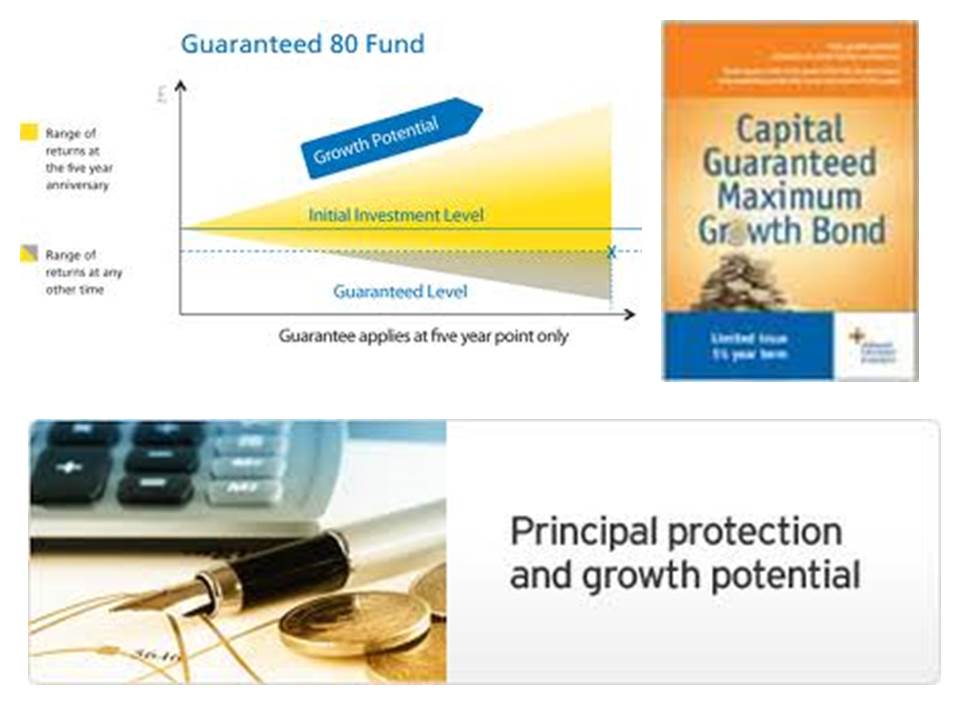
These bonds promise us 80% or 100% or even 120% of stock-market growth over 4 or 5 or 6 years. But they guarantee we get our capital back in full if the stock market falls a bit. This “guarantee” has attracted many risk-averse savers and we have put over £60bn into these dreadful products.
The sales pitch often used to convince financially-naïve customers to put their savings into these schemes is something along the lines “you get all the benefits of stock market investing without the risks”. But this is a lie.
Almost all the benefits of investing in shares come from the dividends paid by the companies whose shares you buy. But these guaranteed bonds usually don’t actually buy any shares. They are mostly linked to complex financial derivatives which track stock-market levels. And if they do actually buy shares, they don’t give the dividends to savers. Savers only benefit if the market index goes up. Moreover, often the guarantee only covers you up to a certain level if the stock market does fall. If the stock market drops below that level, your losses can be horrendous.
So instead of giving “all the benefits of stock market investing without the risks”, these schemes actually give you virtually none of the benefits of stock-market investing, with often huge risks. Don’t either you or anyone you know be taken in by this blatant lie.
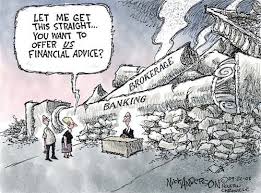
And anyway, why would you trust one of our corrupt, bankrupt banks to give you financial advice?
By David Craig, on November 9th, 2013 (This is the first in a series about the biggest lies people in financial services tell us to get hold of our money. I hope these will be useful to readers. Not all will be relevant to everyone, but perhaps they could be useful to your family or friends.)
If it were the case that cash (money held in a bank savings account) usually outperformed shares (either shares held directly by savers or held by unit trusts and pension funds) then most of us would be much better off leaving our savings in a bank deposit account rather than investing in stock markets, unit trusts, bonds, ETFs, OEICs or whatever. But this would also mean that most of Britain’s 28,000 supposedly “independent” financial advisers (IFAs) and many tens of thousands of bank ‘financial advisers’ (salespeople) plus most personal finance journalists would be out of a job. So, those who want us to hand our money over to them are constantly repeating the mantra that ‘over the longer term, shares outperform cash’.
This is a typical chart produced by an investment company (in this case Blackrock) supposedly showing the returns on £10,000 invested in shares, bonds and cash over a 25-year period
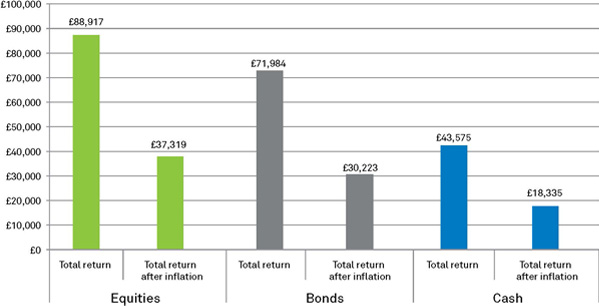
Well, it looks like shares are the place to be. There is only one small problem – it’s not true!
I have always believed the ‘shares outperform cash’ story till I read the excellent free book Monkey with a Pin. The data most journalists and financial advisers use to justify claiming ‘shares outperform cash’ is usually the yearly Barclays Equity Gilt Study. We have now learnt that anything with the crooked Barclays name attached should be treated with the utmost caution. When comparing the returns on shares and cash, Barclays don’t look at the interest we would get from 2- and 3-year higher interest bank and building society accounts. Instead Barclays use UK Government 5 Year Treasury Bills as what they call ‘cash’.
These Treasury Bills are not available to ordinary savers like you and me, so to use them as a proxy for ‘cash’ is ridiculous. Moreover, the interest paid by 2-and 3-year higher interest deposit accounts is almost always much higher than Government Treasury Bills. At the moment, UK Government 5-year Treasury Bills pay around 1.45%. Even with savers’ interest rates at rock bottom due to our useless government’s Funding For Lending scheme, you can get 1.8% on a 1-year savings account, over 2% on 2-years and over 3% on 5 years. So a 5-year savings account is paying more than twice the interest of a 5-year Treasury Bill.
If Barclays used the average interest paid even by 2- and 3-year higher interest bank accounts, then for 80 of the last 100 years, cash would have easily outperformed shares. There was just a brief period of 20 years (the 1980s and 1990s) when shares outperformed cash. This was because of a flood of baby-boomer savings into unit trusts and pension funds. As the baby-boomers retire and their money gets taken out of shares and pension funds, we can expect falls in share prices. And, of course, Barclays don’t take account of the £150m a day we savers who do put money into shares pay in fees, commissions and many other charges to people like Barclays, IFAs, unit trust bosses and pension fund managers.
Taking the chart from Blackrock (above), you should at least double the return from cash to take account of what we ordinary savers would get from a reasonably safe 2-year or 3-year bank deposit account. If you do that, you’ll see that cash and shares are pretty evenly matched. The only difference is that if we keep our money in cash, all the parasites in the financial services industry can’t keep creaming off fees and commissions and our personal finance journalists would have little to write about.
So, if a bank or financial adviser or personal finance journalist ever claims that ‘over the longer term shares outperform cash’ either they are knowingly lying to you to earn commissions by selling some investment that will make them richer than it will make you or else they are so stupid that they don’t even know how the thoroughly misleading ‘shares outperform cash’ calculation is done.
You have been warned.
Tomorrow: Financial services Lie No. 2 – “your bank can help you grow your savings”
By David Craig, on November 8th, 2013 I’m writing a book on how people sell things to us and so thought I might use the next few days exposing some of the biggest lies that the financial services industry uses to get hold of our money.
We have about £4trn in savings – bank accounts, unit trusts, pensions, annuities and life insurance. Every minute of every working day, the people who have sold us financial products and who manage our money take about £1m. That’s over £400m a day, over £105bn a year. That’s an awful lot of our money going into the pockets of a relatively small group of people.
If we were getting great interest on our savings, if our unit trusts were achieving the mouth-watering growth rates puffed by the ads in the Money sections of our weekend newspapers and if we were all looking forward to financial security in retirement, then giving these people £1m a minute (£400m a day) might be justified.
But the interest on our savings is pathetically low and is below the rate of inflation. So our savings are losing value every minute of every day. Most unit trusts fail to get anywhere near the growth they claim they can achieve. And the poor performance of most pension funds and catastrophically low annuity rates mean many people are in for an awfully sobering financial shock when they reach retirement.

So, I thought it might be worth using the next few days to look at the biggest lies we are told by people connected with financial services as they try to make themselves an awful lot richer at our expense.
Hopefully by exposing these lies, I can help my readers keep more of their money out of the hands of the greedy, self-serving parasites in the financial services industry. (Then maybe a few grateful readers might buy copies of my books GREED UNLIMITED and/or PILLAGED. Or would that be an ask too far?)
Though, if in a few days readers don’t find these helpful, please get in touch and I’ll go back to writing about more controversial stuff.
Tomorrow: Lie number 1 – “Over the longer term, shares outperform cash”
By David Craig, on November 7th, 2013 Here in Thailand it’s over 30 degrees – if you want to do any exercise, running or tennis, you have to do it before 08.00 in the morning. After that it’s too hot. Yet FIFA have awarded the 2022 Football World Cup to Qatar where the temperature will be in the 40s. Seems odd?
Type ‘2022 Football World Cup’ into Google and one of the first suggestions Google makes is “Qatar World Cup corruption”. I wonder why?
I’ve been trying to think why Qatar should merit holding the World Cup. Is Qatar a great world footballing nation?

Hardly. Ah, maybe it’s because Qatar have been world leaders in promoting politically-correct, but otherwise laughable, women’s football? I think these are photos of Qatar’s women’s football team plus coaches, physios and supporters

No, maybe that’s not the reason either.
So, how did Qatar win the rights to hold the competition?

Apparently the going rate for a vote for Qatar was about $1.5m. You can read more about this scandal here https://bleacherreport.com/articles/1518079-qatargate-2022-outlining-the-evidence-that-suggests-qatar-cheated-to-win-bid
I think what’s truly shocking about Qatar holding the World Cup is not the alleged corruption. After all, we all know that international organisations like FIFA, the IOC and, of course, the UN are utterly rotten. It’s how blatant the alleged corruption is.
What will they do next? Award the Winter Olympics to Saudi Arabia?
By David Craig, on November 6th, 2013 I’m sure you all know that most banks will run your current account and linked debit card free of charge. In fact, some banks like the Halifax will even give you a one-off payment of £100 plus a further £5 per month if you move your current account (plus direct debits) to them and meet a couple of conditions.
I’m sure you also know that many banks have been persuading their customers to move to what the banks call ‘packaged accounts’. These ‘packaged accounts’ are current accounts where you pay anything from £10 to £15 a month and in return you get your current account and debit card plus a few ‘extras’ thrown in like mobile phone insurance, car breakdown cover and travel insurance.

The banks give these accounts fancy names like ‘bonus account’ or ‘privilege account’ or ‘gold account’ or ‘platinum account’ or whatever to make them sound attractive and special and valuable.
I was doing some research for my next book when I came across a figure which really shocked me. Almost 11 million people are paying for these ‘packaged accounts’. This is earning the banks over £132m a month – £1.58bn a year – of which I suspect around 80% is pure profit.
The sales pitch for these accounts might look convincing

These acounts will be good value for a few people who do use all the extras. But most of the 11 million will find that their phones are already covered on other insurances or that the terms for claiming for a lost or stolen phone are so restrictive as to make the insurance worthless: that they already get travel insurance if they pay for their holiday by credit card and/or that the packaged account’s travel insurance covers so little that they have to take out separate travel insurance in addition or that their age means the travel insurance doesn’t cover them anyway; that some will be members of the AA or similar organisations or have company cars which already provide breakdown cover.
Please, if you or anybody you know is paying your lousy bank anywhere from £120 to £180 a year for one of these (usually dreadful) accounts, make sure you really are getting the benefits or else cancel the bloody thing and get a free bank account – or better still move to one that actually pays you to bank with them.
Of the 11 million people with packaged accounts, I believe that at least 5 million are idiots being taken for an expensive ride by their banks. Don’t be one of them.
By David Craig, on November 5th, 2013 I’m having new airconditioning put into my flat at the moment so have to cut today’s blog short.
Here’s a link to a website run by a company called Intelligence Squared which runs debates. https://www.intelligencesquared.com/events/we-have-nothing-to-fear-from-high-levels-of-immigration/ This debate is about immigration and features Nigel Farage as one of the speakers.
The first speaker, some dreadful establishment woman, who seems to be the usual politically-correct buffoon, who moves effortlessly from one well-paid quango job to another by brown-nosing the right people, claims immigration has been good for Britain. Her main justification seems to be that Prince Albert – Queen Victoria’s husband was an immigrant. The frightening thing about her talk is the utter arrogance and self-conviction of her fatuous arguments. Given speakers of her quality, perhaps the company should be called Intelligence Halved?
I didn.t watch the rest of the speakers, but Farage comes on after about 57-58 minutes and it might be worth listening to him.
(By the way, yesterday I asked readers to help support this site by buying copies of my latest book GREED UNLIMITED. Those of you who have been good enough to buy copies may be amused/dismayed to learn that not a single one of the hundreds of people who read this site but have not bought copies bought a copy yesterday after my request. Hey ho, that’s the way it goes.)
By David Craig, on November 4th, 2013 One of my readers contacted me asking what really happens when our banks get fined for rate-rigging, money-laundering, market manipulation and all the other things that they’ve been up to over the last few years. The answer is simple – we’re the ones who end up paying.
You’ve probably read about Barclays being fined $450m by US and UK regulators for LIBOR rate fixing: HSBC being fined $1.9bn in the US for money-laundering and £3.6bn in the UK for mis-selling products and JP Morgan agreeing a $13bn settlement in the US for mis-selling mortgage securities. And you may have thought that this serves them right, that it was about time our greedy, corrupt bankers paid for their own crimes. But who actually pays this money? Is it the bankers who were responsible in the first place? Can pigs fly at supersonic speed?
Banks have 3 main things they can do with their earnings – pay salaries and bonuses to their staff, retain them to build their businesses or pay them out as dividends to shareholders. This brings up what’s called the “Agency Problem”. The theoretical owners of banks (like all public companies) are the shareholders. The executives and managers are the owners’ agents who should supposedly run the businesses in the long-term interests of the owners (the shareholders). But in many of our companies and all of our banks, the companies have been hijacked by the agents (executives and managers) who run them for their own short-term rapid enrichment and to hell with the shareholders.
The chart below shows how at 3 major banks, dividends paid to shareholders have all but evaporated since 2000 and retained earnings have shrunk at two of them, while salaries and bonuses paid to bankers keep on increasing.
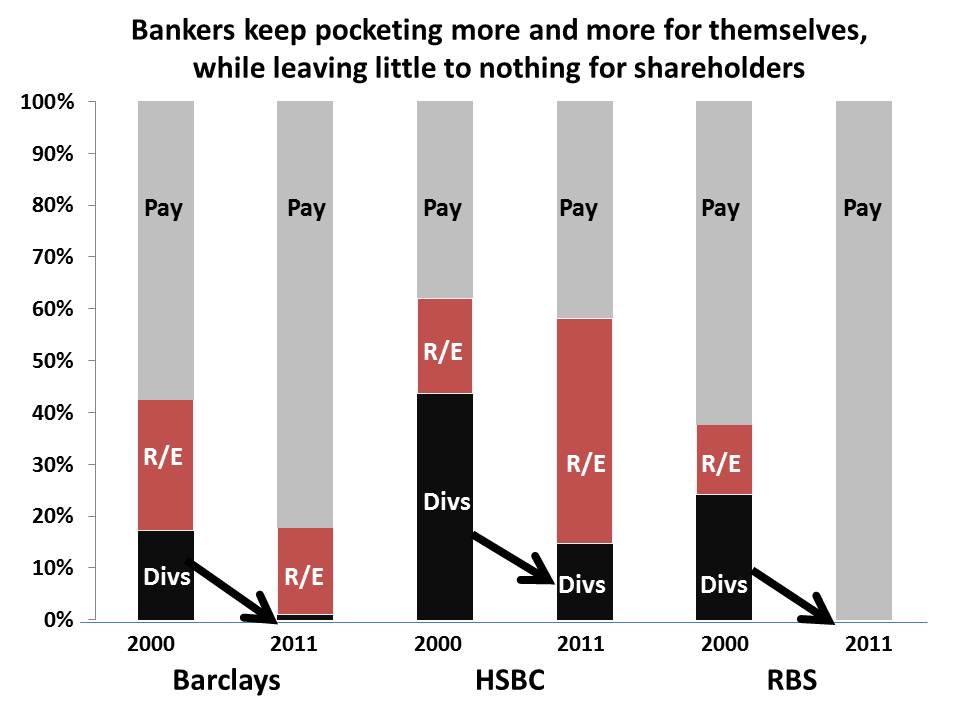
(The reason why retained earnings rocketed at HSBC was that the bank was keeping money back from shareholders to pay some of the massive fines it knew were coming)
HSBC is a good example of how bankers have partied while screwing their shareholders. HSBC had to pay record fines in 2012 of $4.2bn. Yet the CEO’s remuneration shot up from $10.6m in 2011 to $14.1m in 2012. So, he didn’t suffer too much from the corruption for which as CEO he was ultimately responsible.
The picture has been the same at most other banks – the bosses and managers keep giving themselves more, while making the owners (the shareholders) pay for the managers’ corruption and incompetence. And who are the banks’ main shareholders? Rich, greedy capitalists? No. They’re usually you and I through the money we’ve saved in unit trusts and pension funds. The bankers stray, we pay.
But the situation is even worse than this. By offering to such huge fines without hesitation, the bankers are also getting the authorities to agree to drop all criminal proceeding against them. So, they are using shareholders’ money (our money) both to pay for their own misdeeds and to buy themselves immunity from prosecution. Amazingly, this is something not a single financial journalist has thought worth mentioning.
Moreover, our politicians of all parties have been huffing and puffing in self-righteous indignation about the police who probably lied over the Plabgate affair. But we haven’t heard them demanding the prosecution of any bankers. To paraphrase someone much more intelligent than myself – “the only difference between the three main political parties is the speed at which their knees hit the floor when a banker comes demanding favours”.

Christmas is coming. Is there anyone you dislike and want to depress? Well, why not give them a copy of my latest book GREED UNLIMITED? I have rather a lot left and my wife might start burning them to heat up our home this winter (and reduce our energy bills) if I don’t sell some soon.
By David Craig, on November 3rd, 2013 I hope you enjoyed reading my fable about the ant and grasshopper as much as I enjoyed adapting it for Britain (sadly, the ideas was not mine). Please do forward the link to anyone you know who might be amused by the story https://www.snouts-in-the-trough.com/archives/7300
A company producing a documentary on complaints handling by large companies has asked me to pass on this request for people to participate in the programme. Please pass this on if anyone you know might be interested.
From my discussion with the producer, I rather suspect this documentary may be slightly below the intellectual level of those who read this blog. But please contact them if you’re want to tell them your stories.

(Tomorrow – how the big banks have suckered us into paying their massive fines for their widespread corruption)
By David Craig, on November 2nd, 2013 It’s estimated that about 60% of Somalia’s GDP comes from money sent into the country to their extended families by Somalis living abroad. According to the Financial Times, British Somalis send an impressive £500m a year back to their relatives. And our great PM has several times praised Somalis for their strong sense of family bonds

The politically-correct and opinion-formers like to give the impression that Britain’s Somalis are hard-working and contribute not only to our country, but also to their families back in that hell-hole Somalia. As one community leader claimed: “Most Somalis I know are going to university, getting their masters, becoming successful business people. Our parents have pushed us. It has given us a certain drive.”
But let’s see if the politically-correct are being entirely honest with us. And let’s dig around to see exactly where Britain’s Somalis get the £500m a year they send home.
Officially there are about 300,000 Somalis in Britain (though there may actually be over a million). Somalis tend to have quite large families, but let’s play safe and assume that 150,000 of Britain’s 300,000 Somalis are children. That would leave 150,000 adults.
Let’s further assume that about 30,000 Somalis are either too old to work or have disabilities preventing them from working. That would leave 120,000 Somalis who could work. If we then assume that half of these 120,000 are men and the other half are women, that gives us 60,000 men and 60,000 women who could be working to save up the wonderful £500m Somalis send home each year.
Now, we know that the employment rate for Somali men is about 35%. The other 65% are what’s politely called “economically inactive”. So that’s (60,000 x 35%) 21,000 Somali men who work. About 5% of Somali women work – so there’s another 3,000 wage-earners.
With me so far? So, apparently 24,000 hard-working Somalis earn enough to support themselves and their families and have enough money left over to send £500m home each year – that’s £20,833 for every Somali in work. Duh! There’s something wrong here. There’s no way that each working Somali earns enough so that, after tax they can pay their own and their families’ living costs and each have £20,833 left over to send home!
So, where’s the money coming from? It’s certainly not from the 24,000 Somalis who do bother going to work. I think we can all guess the answer – benefits! Yup, our benefits system is so generous to the 276,000 Somalis who contribute nothing at all to our country, that they can not only live well in Britain, but can also send £500m of our taxes back to their relatives in Somalia.
No wonder they get so excited when our idiotic leader Cameron pledges to help their basket-case country

|
|