
 David Craig, on July 31st, 2026
Friday – weekend blog
The new ‘gods of hellfire’
The current constant hyperventilating news reports about the ‘fires from Hell’ ravaging parts of Spain, France, Italy, Greece and even Britain reminded me of the 1968 song “Fire” by The Crazy World of Arthur Brown (link at the end of this blog).
Arthur Brown sang: “I am the god of hellfire and I bring you FIRE”. But who are the new ‘gods of hellfire?’ Who or what are causing all the current wildfires? It’s obvious that there are two main conditions which have made today’s wildfires so destructive:
- a wet winter led to more vegetation growth
- a very hot dry spell has increased the likelihood of fires spreading
But neither of these conditions explain how the fires started in the first place. Most news reports tell us that fires “broke out”. But most of our media seems spectacuraly uninterested in what or who caused these fires to “break out”. It might be due to spontaneous combustion? Professor Googles tells us that: spontaneous combustion happens through self-heating, caused by slow internal chemical reactions like oxidation or bacterial fermentation that build up heat faster than it can escape. To an ignoramus like myself, that doesn’t seem to be the likely cause of most of the current wildfires.
Another theory is that it is us humans who have caused most or even all the wildfires. The Daily Telegraph seems to point at this possibility in a report:
Since the beginning of the month, 184 people have been arrested in connection with wildfires across France. Five have already been handed jail sentences, and 15 are awaiting trial.
One of the arrested seems to have been extremely ‘productive’:
In the department of Var in south-eastern France, a 23-year-old man is in police custody for allegedly starting 10 fires. CCTV cameras helped police identify the man, who is accused of setting fires on the edge of forests while travelling between towns for several days on his motorbike.
In Spain a construction worker is being prosecuted because:
The police have alleged he carried out work without a permit, and the excavator was not fitted with proper fire-extinguishing equipment. Firefighters at the scene called for air assistance as the flames spread into a deep ravine, but the blaze soon became uncontrollable. The inferno ravaged 193 square miles, an area about the size of Leeds, alongside a smaller wildfire, forcing some 90,000 residents to flee towns and villages.
That’s a pretty impressive fire allegedly caused by just one allegedly careless person.
A study in the journal PNAS (Proceedings of the National Academy of Sciences) found that in the USA
Human-started wildfires accounted for 84% of all wildfires, tripled the length of the fire season, dominated an area seven times greater than that affected by lightning fires, and were responsible for nearly half of all area burned.
Had any of Europe’s wildfires been caused by lightning strikes, I feel sure that our intrepid climate reporters like the BBC’s (IMHO) ‘rodent-featured’ Justin Lowrat would have told us. So it would not be unreasonable to assume that all Europe’s fires were caused either by human stupidity or by human criminality.
Would it perhaps be informative if our overexcited reporters spent just a little time investigating the cause of the wildfires – who are the new ‘gods of hellfire’ – in addition to reporters’ apocalyptic hyperventilating about the scale of the fires?
Drought or just not enough water?
We now hear that much of England and all of normally rainy Wales have been declared to be in ‘drought’. That’s not unexpected given that it hasn’t rained in some areas for almost a month. But is the lack of rain the main cause of the water shortages?
The last major reservoir built in England was Carsington Water in Derbyshire, which was completed in 1992. At the time, the population of England was officially around 48 million. The population of England is now officially about 59 million. It could possibly be the case that increasing the population by 11 million without building a single new reservoir for 34 years might put a strain on the amount of water available?
And then we have leakage. Around a quarter of all water provided by our water companies is lost due to leakage:
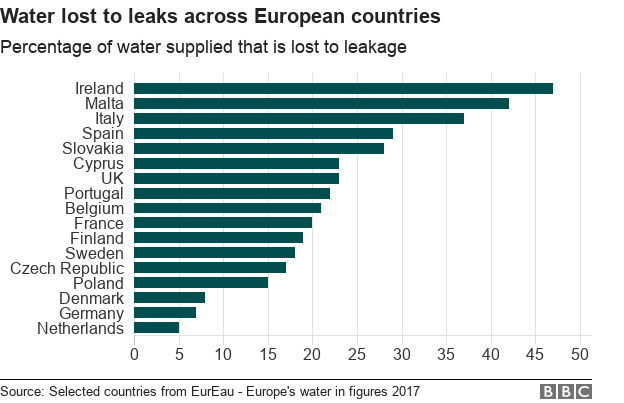
So, is there a drought? Absolutely. Are current water shortages purely due to ‘Global Boiling’ climate change as most mainstream media ‘news’ reports would have us believe? Absolutely not. A failure to build new reservoirs at a time of massive population increase and excessive leakage are also important contributing factors.
Incidentally, in my previous blog, I recounted the tale of how it took me 9 weeks and more than 12 reports to get my (IMHO) utterly useless and incompetent local council to deal with a water leak near my home which (I calculated) has lost more than 16,000 litres of water during those 9 weeks.
And finally, here’s Arthur Brown:

 Category:




















Leave a Reply