
 David Craig, on June 24th, 2026
Wednesday blog
Hopefully some readers have survived the kind of supposedly ‘deadly’ heat many of us spend thousands of pounds each year to travel to countries like Spain and Thailand to experience.
Useless workshy plods?
A few months ago I came across a man lying face down in the water on a Thailand beach. I got help (drowned people are very heavy) to pull him onto the beach and then we tried CPR. But he was already well and truly dead so there was nothing we could do:

Following that I consulted Professor Google and learnt that:
- Permanent brain damage can begin in as little as four to six minutes without oxygen after the heart stops beating. Because the brain is highly dependent on a continuous supply of oxygenated blood, the timeline for damage advances rapidly as the deprivation continues after a heart stops
- A person can generally be resuscitated for up to 10 minutes after their heart stops without sustaining severe, irreversible brain damage, assuming CPR is started immediately. Without CPR or defibrillation, survival drops sharply after 8 to 10 minutes
That brings me to a sad event at my local beach a couple of days ago. I was doing my usual 7-mile walk and noticed a rescue helicopter circling the beach three times before landing. As I got closer I saw a crowd of people grouped around a body while one person was frantically pumping away doing CPR. I estimated that about 4-5 minutes had passed since I noticed the helicopter ambulance. Given the time it would have taken for the rescue helicopter to reach the scene, it must have been more than 10 minutes since the person had been pulled from the sea. Getting even closer I saw there was one police car and a regular ambulance in addition to the rescue helicopter:
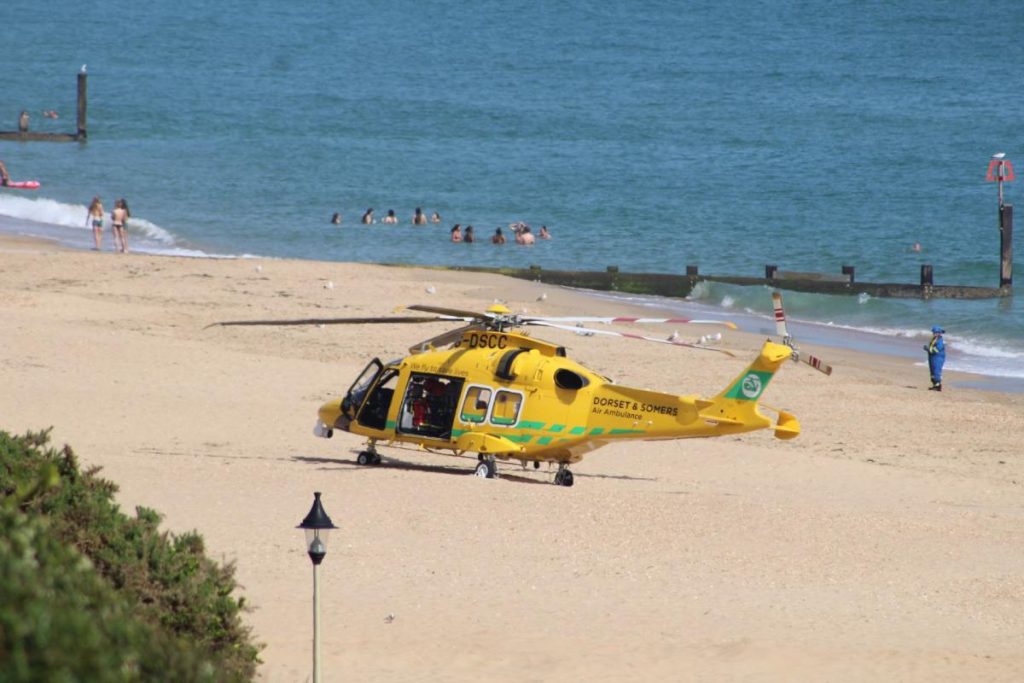
Apparently a woman had been pulled from the water and they were now trying to resusitate her.
I’m not normally a rubber-necking gawper. But having had the experience of trying to save a drowned man in Thailand, I hung around interested in how the situation would be handled.
At probably 10 minutes (so at least 15 minutes since the woman was pulled from the water) another ambulance and another police car arrived. Then at more than 15 minutes (perhaps 20 minutes since the drowning), a police van with no fewer than three of our useless local plods turned up. By then it would have been more than clear to the crews of the two ambulances already there, to the two cars of plods already there, to the lifeguards already there and to the crew of the rescue helicopter already there that the drowned woman was beyond rescue:
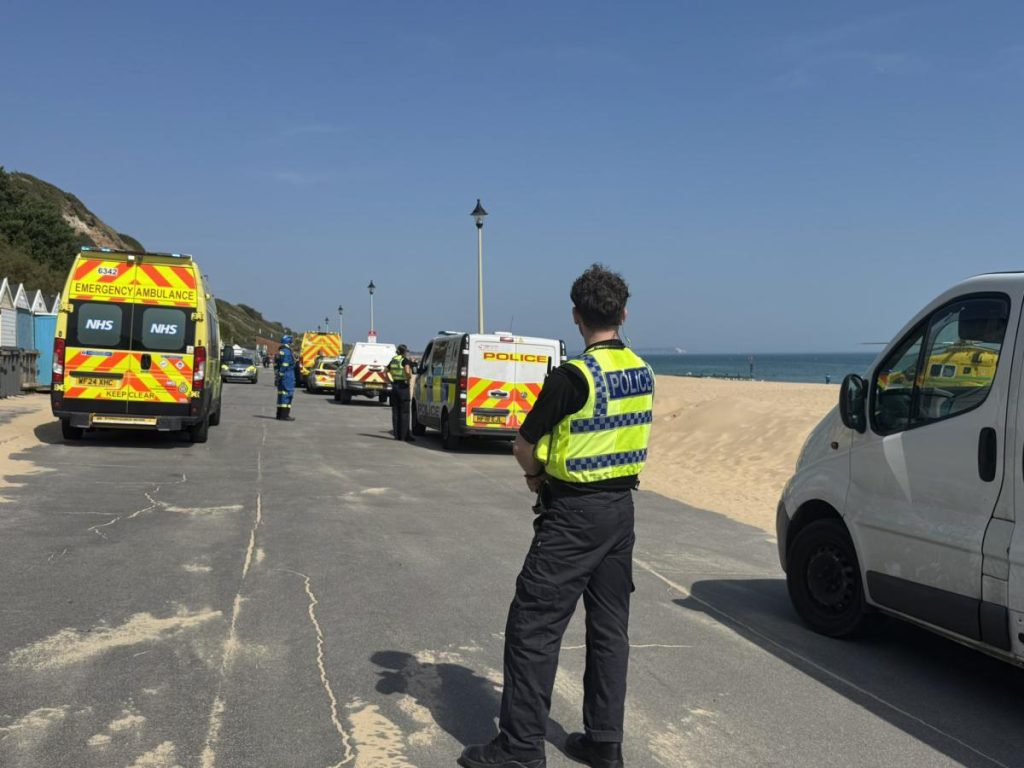
Quite what the three plods arriving on the scene so late hoped to achieve is a mystery to me. But the drowning seemed to attract quite a crowd of supposed ‘rescuers’.
Of course, when someone is in trouble, we must do our best to help them. But two ambulances, one rescue helicopter, three police vehicles with seven plods and several lifeguards seemed to me to be a bit of overkill. It seems extraordinary to me that, at a time when the police and NHS bleat and moan about not having enough money, they can devote so many resources to just one drowned person, especially when most of the ‘courageous’ rescuers arrived too late to be of any use anyway. Perhaps the NHS and plods aren’t quite as cash-strapped or even as ‘overwhelmed’ as they continually claim?

 Category:




















Leave a Reply